Rapid local response
Dispatch runs 24/7, and active water is treated as urgent on nights, weekends and holidays.
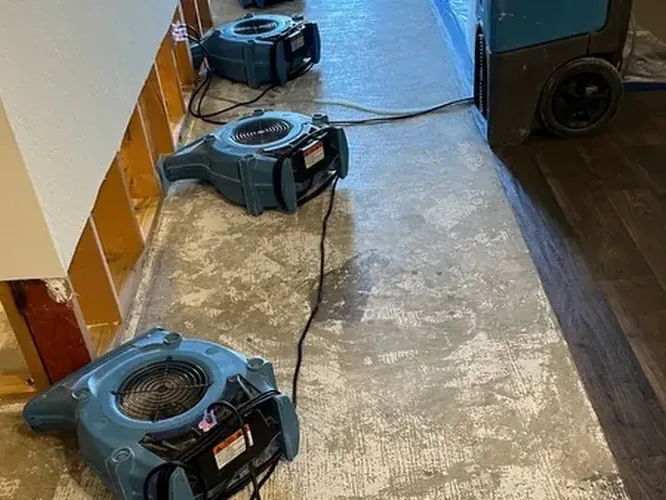
Extraction removes the liquid, but moisture stays in framing, subfloors, concrete and wall cavities. The drying team sets air movers and dehumidifiers by measured need and keeps adjusting them until daily readings reach the dry standard.
(888) 471-9821Set drying equipment in the wet roomsLeave air movers and dehumidifiers running despite the noise.
Closed rooms let dehumidifiers work well and keep outdoor humidity out.
Leave equipment where it was placed, since airflow is planned room by room.
Tell the crew if a stain grows or an odor appears.
Independent restoration contractors do the work. This is how a proper job runs, so you know what to expect and what to ask for.
Dispatch runs 24/7, and active water is treated as urgent on nights, weekends and holidays.
The drying team maps moisture first, then dries the structure until the readings say dry.
Daily moisture readings and timestamped photos taken before demolition, the file an adjuster asks for.
Basements, sump pits, frozen pipes in cold snaps and heavy summer downpours are everyday calls here.
Drying one area at Class 1 or 2 costs $1,000 to $2,500. Class 3 across several rooms runs $2,500 to $5,000, and Class 4 concrete can reach $8,000 or more.
Ranges are typical, not a quote: the water category, the wet square footage, the material class and how fast drying started move the number most. Run the water damage cost calculator for a closer planning range.
Meters and a thermal camera set the drying class and equipment count.
Air movers and dehumidifiers go in by wet area and room volume.
Temperature, humidity and material readings are logged every day.
Equipment comes out only when each material meets its dry goal.
Hot, humid summers make drying slower here, and the city's many multi-unit buildings add shared cavities and stacked floors that hold moisture out of sight. Structural drying is the measured part of a water job, where equipment and readings replace guesswork.
Class 1 and 2 jobs involve small areas or porous materials that release moisture easily, while Class 3 and 4 jobs involve wide spread or dense materials such as hardwood, plaster and concrete.
Equipment counts follow the wet square footage and the room volume.
A psychrometer tracks temperature and humidity, moisture meters track each material, and a thermal camera finds hidden wet spots. Daily visits compare today's numbers with yesterday's.
These logs are what a carrier or property manager sees when the claim is processed.
Neighbors share cavities, so the plan covers every wet unit and keeps separate readings for each. See condo and townhouse leak cleanup for the owner records, and water extraction for the step that comes before drying.
A material can feel dry and still hold moisture inside. Equipment should stay on until the meter says the material has reached its dry goal.
The drying team sets equipment across the Fifth Ward, Feaster Park and Raritan Gardens, in the downtown towers and in buildings near the College Avenue Campus and Queens Campus.
The same service nearby: structural drying and dehumidification in North Brunswick, Highland Park, Milltown.
Water damage restoration in New Brunswick · every town covered
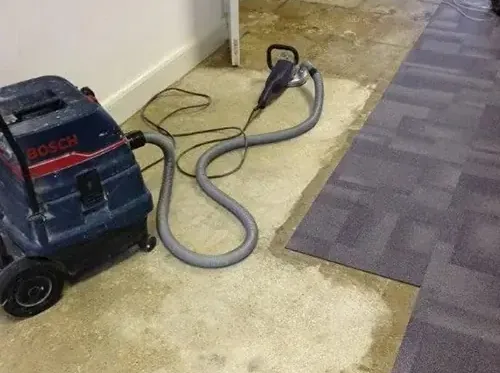 Water Extraction and Removal in New BrunswickStanding water pulled out with truck-mounted units before it wicks into pad, drywall and framing.Read the full rundown
Structural Drying and Dehumidification in North BrunswickFraming, subfloor, block walls and slab dried to within 2 to 4 points of a dry reference.Read the full rundown
Water damage restoration in New BrunswickOpen the town page
Most jobs need three to five days, and thick materials, hidden wet cavities or humid summer weather can add more.
Air movers and dehumidifiers move large volumes of air, and the noise is the cost of fast drying. Turning units off early only lets moisture settle back into the structure.
LGR units work best at normal room temperature and handle most jobs. Desiccant units pull moisture chemically, so they suit dense materials, cold rooms and stubborn Class 4 drying.
Moisture meters read each material against an unaffected reference, and the readings must match for the dry goal to count. Daily logs show the trend.
Yes, because dehumidifiers and air movers draw power around the clock. The drying logs can support a claim for the added utility cost.
Yes, and it should. Drying comes first, because repairs over wet framing trap moisture and invite damage later.
Rooms still damp after the water is gone? (888) 471-9821.
The drying team places air movers and dehumidifiers by measured need, logs the readings each day and removes the equipment only when materials meet their dry goals.