Rapid local response
Dispatch runs 24/7, and active water is treated as urgent on nights, weekends and holidays.
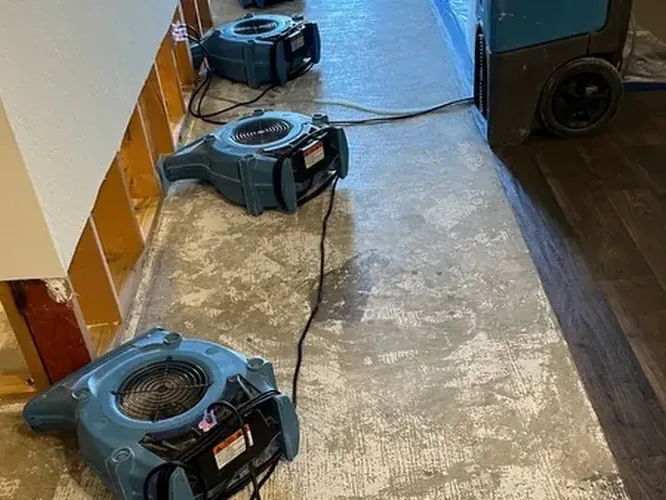
Water that soaks into framing, subfloor and drywall does not leave on its own, and the borough's hot, humid summers slow drying even more. The drying team controls the air until every material reads dry again.
(888) 471-9821Call to set drying equipment in a wet houseDrying cannot start while water pools, so pumps and mops come first.
A closed house lets dehumidifiers work on the air they are meant to dry.
Machines are placed to a plan, so moving them breaks the airflow.
Pictures before drying show what was wet.
Independent restoration contractors do the work. This is how a proper job runs, so you know what to expect and what to ask for.
Dispatch runs 24/7, and active water is treated as urgent on nights, weekends and holidays.
The drying team maps moisture first, then dries the structure until the readings say dry.
Daily moisture readings and timestamped photos taken before demolition, the file an adjuster asks for.
Basements, sump pits, frozen pipes in cold snaps and heavy summer downpours are everyday calls here.
Structural drying runs from $1,000 for one Class 1 or 2 area to $8,000 or more for Class 4 materials such as dense floors and masonry, because desiccant units and longer monitoring cost more.
Ranges are typical, not a quote: the water category, the wet square footage, the material class and how fast drying started move the number most. Run the water damage cost calculator for a closer planning range.
Meters and a thermal camera define the wet zone.
Air movers and dehumidifiers go in by plan.
Readings are logged and machines adjusted.
Machines leave only when every material hits target.
Structural drying is the part of water damage work that decides whether a house recovers or develops hidden trouble later. After a leak or flood, the drying team uses equipment and measurements instead of open windows and fans from the hardware store.
The median home in the borough was built in 1963, and most housing units are single-family houses, so drying usually means working through older framing, trim and flooring. A humid continental climate brings hot, humid summers, when damp air holds back evaporation and drying takes longer without dehumidifiers.
Equipment is moved and rebalanced as readings change. Related work for flooded lower levels is covered under basement flooding cleanup.
Class 1 and 2 jobs involve limited wet material and slow evaporation, Class 3 means water came from above and soaked ceilings, walls and carpet, and Class 4 covers dense, deeply saturated materials such as hardwood, plaster and masonry.
Water removal comes first and is covered under water extraction.
A technician returns each day with a moisture meter, thermal camera and hygrometer, records temperature, humidity and material readings, and then adjusts the equipment. The log shows when each room reaches its dry standard, which gives the carrier a record and tells the crew when to pull the machines.
Surfaces feel dry long before framing and subfloor do, so equipment that leaves early lets moisture return and turns a finished repair into a musty one.
Drying equipment goes into homes across the borough, from the area around Joffre Avenue and Herbert Avenue to the streets near Albert Avenue Park, Brook Park and the Mill Pond.
The same service nearby: structural drying and dehumidification in North Brunswick, New Brunswick, Highland Park.
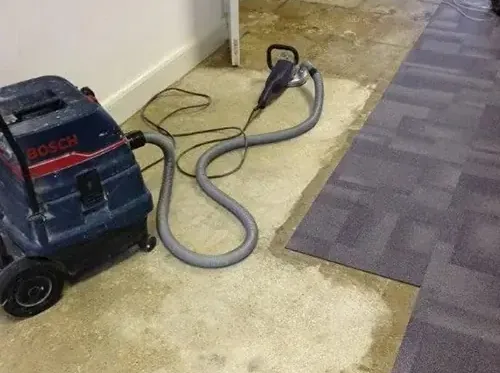 Water Extraction and Removal in MilltownStanding water pulled out with truck-mounted units before it wicks into pad, drywall and framing.Read the full rundown
Structural Drying and Dehumidification in North BrunswickFraming, subfloor, block walls and slab dried to within 2 to 4 points of a dry reference.Read the full rundown
Water damage restoration in MilltownOpen the town page
Most jobs run several days, though dense materials such as hardwood or plaster can take longer, and the daily readings, not a calendar, decide when the equipment leaves.
Air movers and dehumidifiers move large volumes of air and condense moisture out of it, which warms the room, and that warm, dry air is what pulls water out of wet materials.
No. Outdoor air in a humid summer carries more moisture than the wet materials release, so a closed house with dehumidifiers dries faster than an open one.
Temperature, relative humidity and moisture content in framing, subfloor and drywall, compared against a dry reference, which tells the crew where to move equipment and when to stop.
Fast drying is the main defense, because wet framing and drywall can begin to grow mold if they stay damp past the first day or two, and readings show when the risk has passed.
Walls and floors still damp? (888) 471-9821.
The drying team maps the moisture, sets air movers and dehumidifiers, and returns each day to read the numbers until every material reaches its dry standard, with a written log.