Rapid local response
Dispatch runs 24/7, and the response team treats an active leak or a flooded basement as urgent at any hour.
24/7 water damage restoration in North Brunswick, NJ. The restoration team pumps out flooded basements, extracts standing water, dries the structure to the IICRC S500 standard and documents every step for your insurance claim.
(888) 471-9821Basement taking water? Call for extraction now
Shut off the mainThe main valve usually sits where the water pipe enters the basement, near the meter.
Keep out of deep waterStay out if water could reach outlets, the furnace or the panel. Cut power only from a dry spot.
Photograph, then liftTake photos first, then move boxes, rugs and cords up off the floor.
Call within 24 to 48 hoursMold can start growing in that window, and a closed basement holds the damp.
Water and sewage only, from the first pump-out to the last moisture reading, across the township and the towns around it.
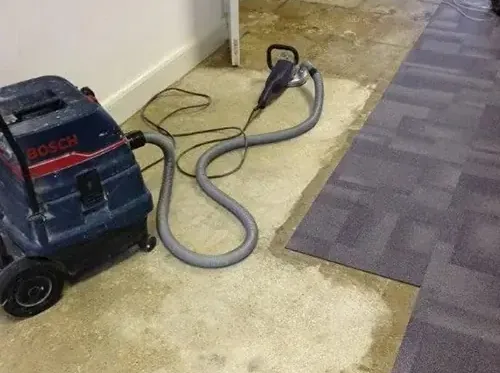 Pump-outWater Extraction and RemovalTruck-mounted extraction pulls standing water before it soaks into pad, drywall and framing.What the crew does
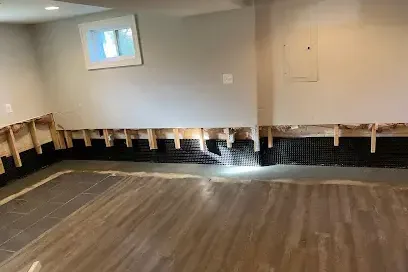 BasementsBasement Flooding CleanupPump-outs, wet carpet and drywall removal and slab drying for finished and unfinished basements.What the crew does
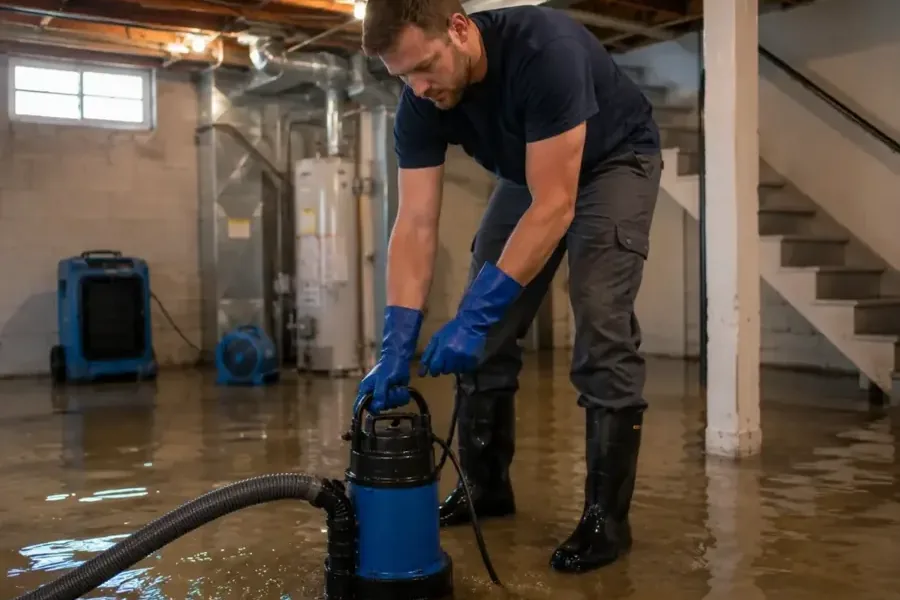 Sump pitSump Pump Failure CleanupDead pumps, stuck floats and storm power outages that let the pit overflow.What the crew does
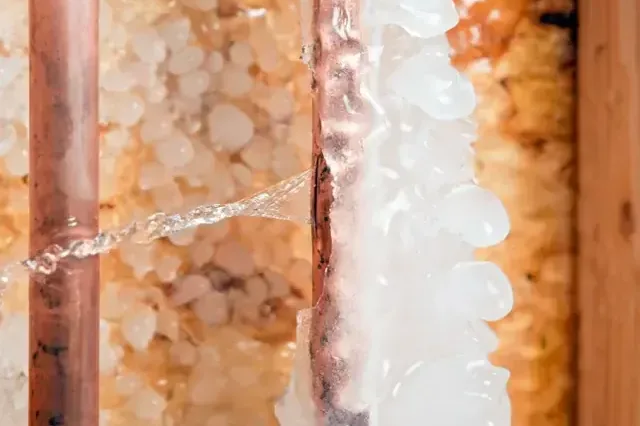 Cold snapFrozen Pipe Water DamagePipes in garage ceilings and outside walls that split during a hard freeze.What the crew does
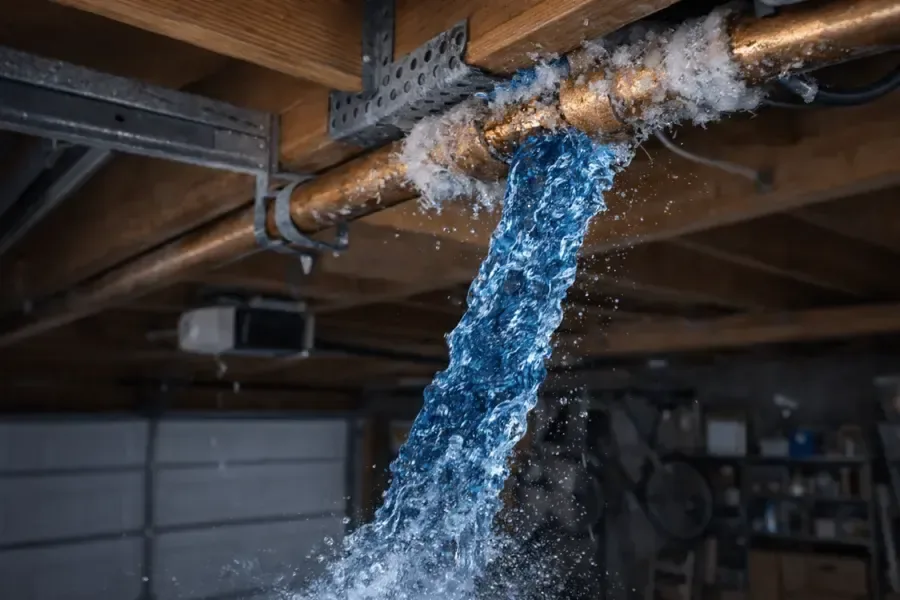 PlumbingBurst Pipe Water DamageSupply pipes that let go inside walls and ceilings, extracted and dried after the shutoff.What the crew does
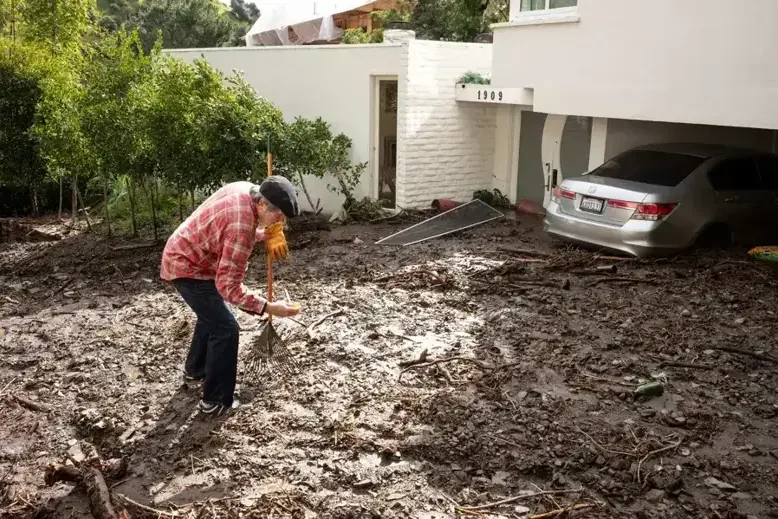 DownpoursFlash Flood CleanupCloudburst and tropical-remnant flooding treated as contaminated water from the start.What the crew does
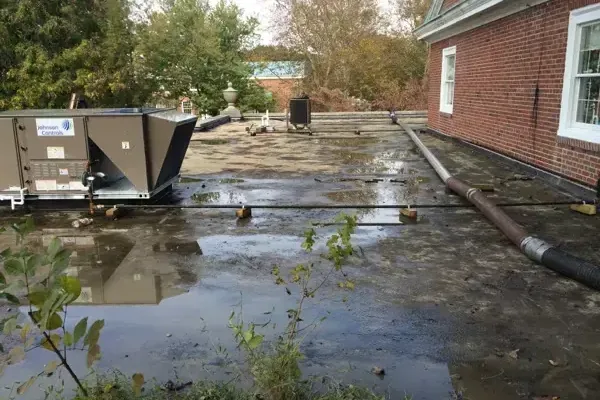 RoofRoof Leak and Ice Dam Water DamageWind-driven rain and ice dams that soak attic insulation and the ceilings below.What the crew does
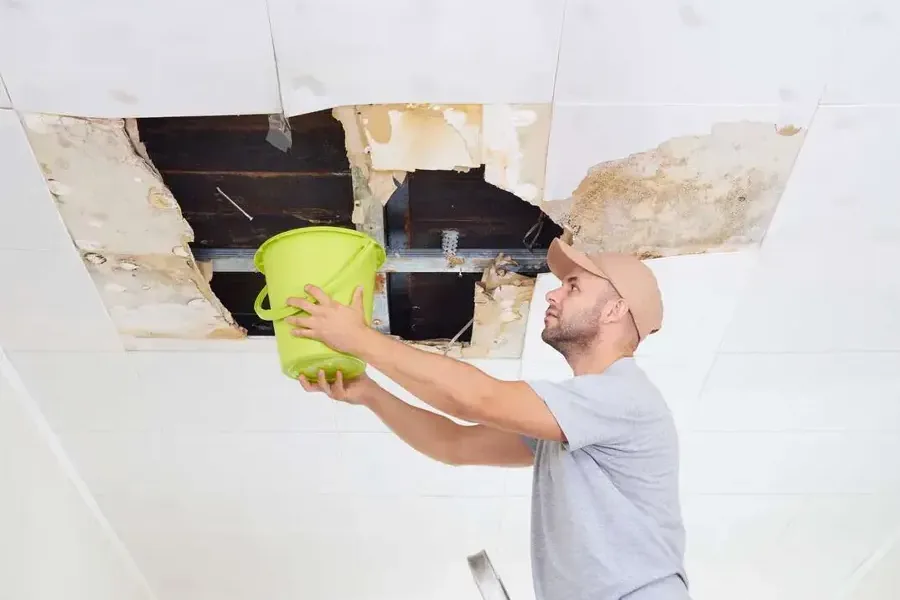 UpstairsCeiling Leak Water DamageBathroom and supply leaks from the floor above, with the drywall opened safely and dried.What the crew does
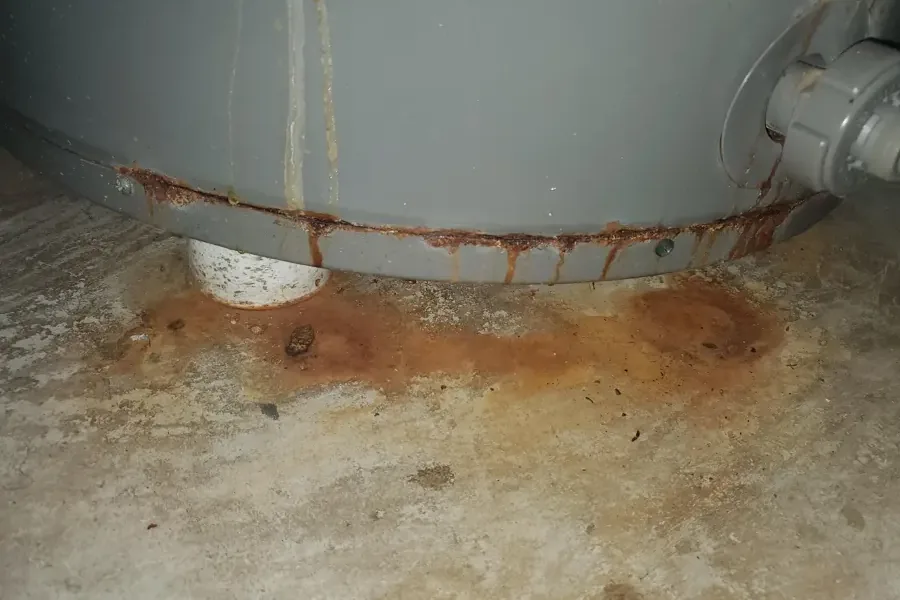 Utility roomWater Heater Leak CleanupTank failures in basements and utility closets, dried before boxes and walls soak through.What the crew does
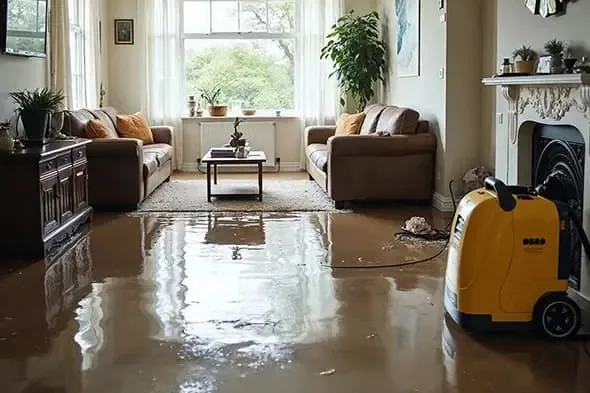 LaundryAppliance and Supply Hose LeaksWasher hoses, dishwashers, ice makers and toilet supplies leaking into floors and cabinets.What the crew does
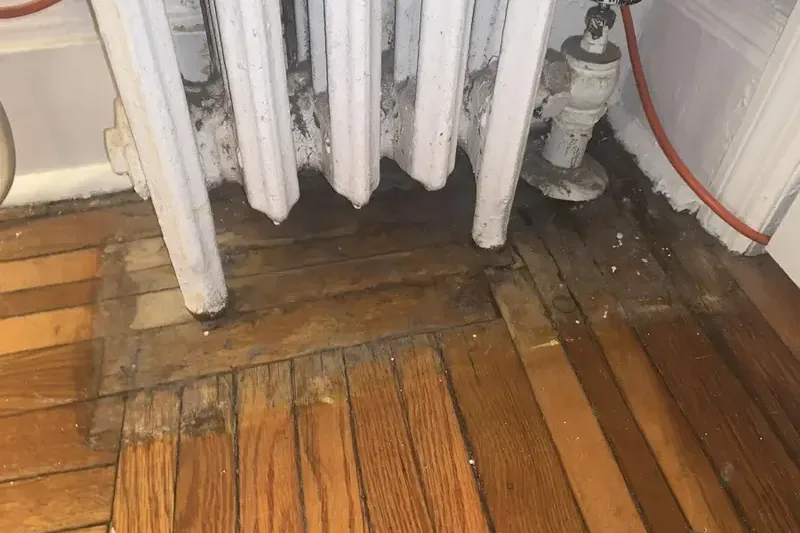 Shared wallsCondo and Townhouse Leak CleanupOne leak in a shared wall or a stacked unit, traced and dried home by home.What the crew does
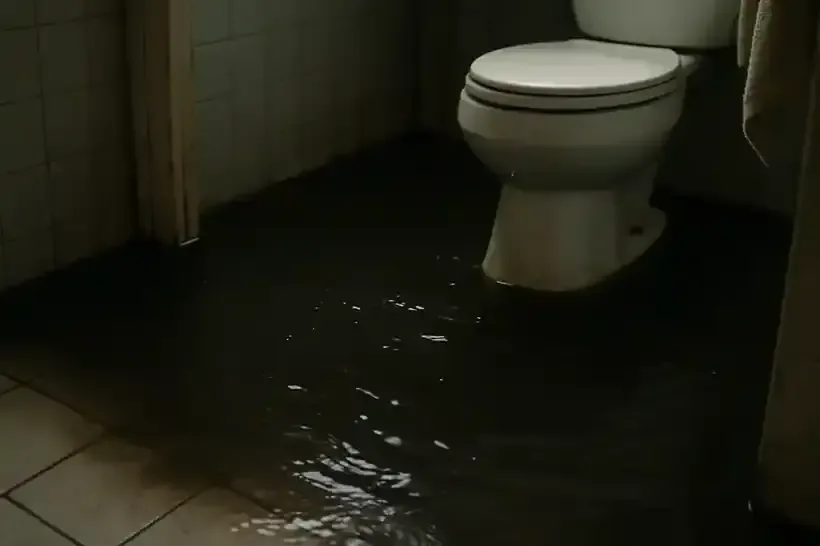 Category 3Sewage Backup CleanupFloor drain and toilet backups handled as Category 3, with porous materials removed.What the crew does
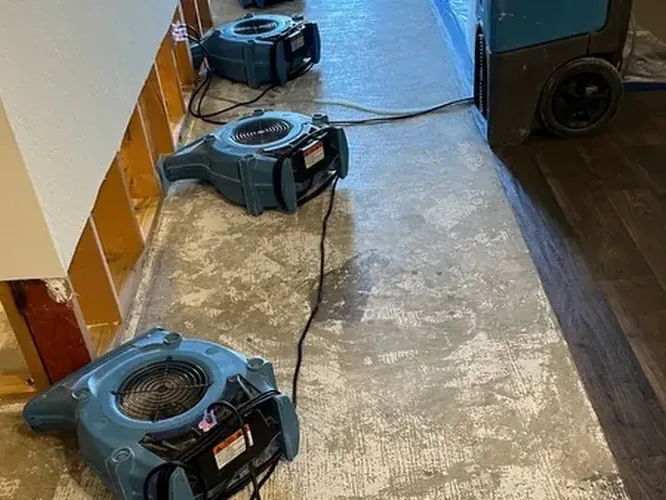 DryingStructural Drying and DehumidificationFraming, subfloor, block walls and slab dried to a verified moisture goal.What the crew does
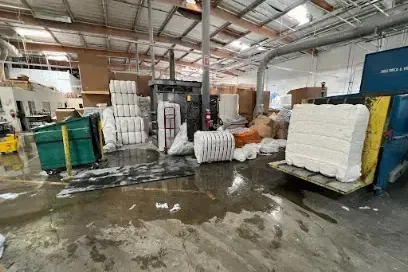 BusinessCommercial Water DamageStores, offices, warehouses and apartment buildings dried in phases to limit downtime.What the crew does
When the remnants of Ida crossed central New Jersey on September 1, 2021, the Raritan River set a record crest at Manville and flash flooding filled basements across Middlesex and Somerset counties. Winter brings the opposite problem: pipes in garages and outside walls freeze and split.
Speak with dispatch about storm water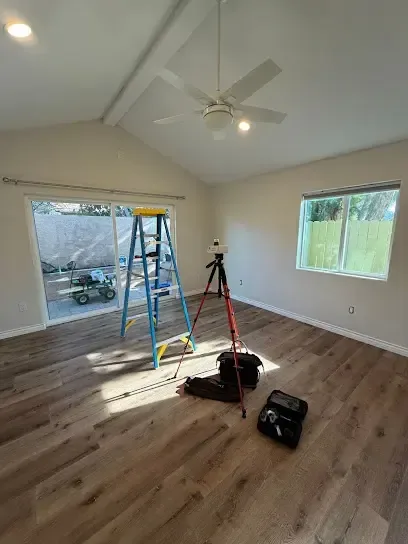
24/7 water damage restoration in North Brunswick and the towns around it. The restoration team extracts standing water, dries the structure to the IICRC S500 standard and documents every step for your claim, from Livingston Park to the homes around Farrington Lake.
Those crews dry split-level basements, slab family rooms and stacked townhouse units to verified readings, not to how the surface looks.
How the work is held to a standardA finished dry-out follows an order and keeps records, whoever does the work.
Dispatch runs 24/7, and the response team treats an active leak or a flooded basement as urgent at any hour.
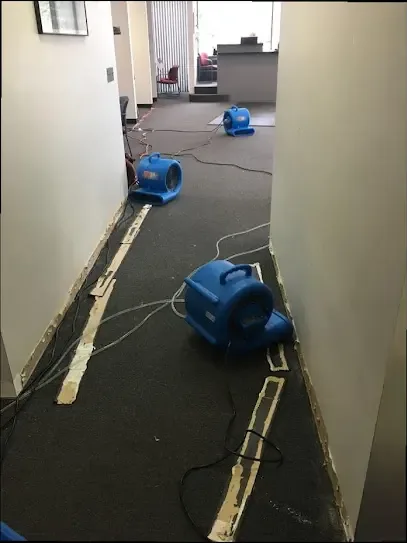
Structural drying, not just surface drying, with air movers and LGR dehumidifiers sized to the class of loss.
Moisture maps, daily psychrometric logs and timestamped photos taken before any demolition.
Wet basements, sump failures, frozen pipes and summer downpours lead the list of local losses.
Thermal imaging and pinless meters find water behind walls and under basement flooring before equipment goes down.
The extraction crew pulls standing water out of the house, not into the next room or the floor below.
Sized to each room's evaporation load, with desiccants for block walls, plaster and slab.
Equipment leaves when wet materials read within 2 to 4 points of a dry reference material.
In North Brunswick, NJ, water damage restoration typically runs $1,200 to $5,000 for a contained clean-water leak and $5,000 to $12,000 for a flooded finished basement, with flood water or sewage losses at $12,000 and up, depending on the water category, the square footage, the material class and how fast drying started.
For a closer planning number, run the water damage cost calculator. A firm figure only comes from an on-site walkthrough of what is actually wet.
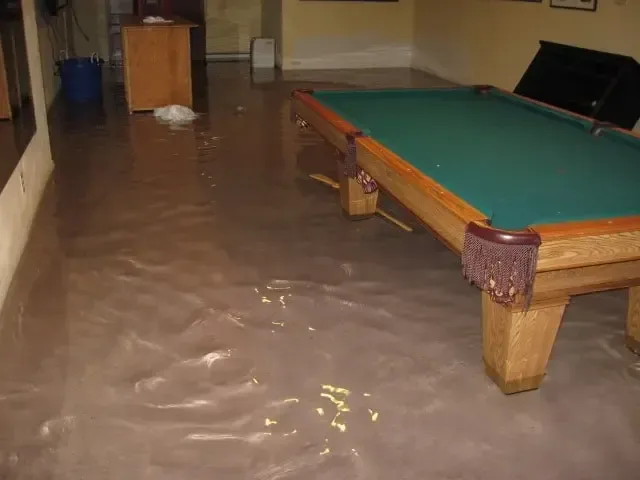
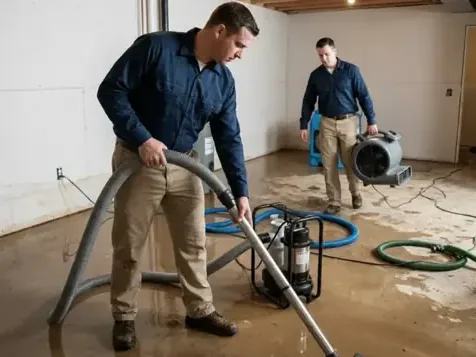
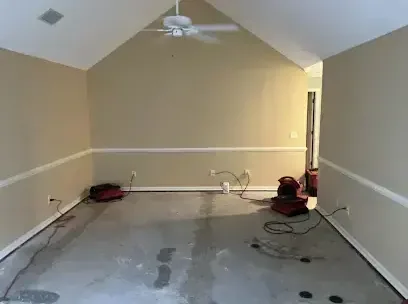
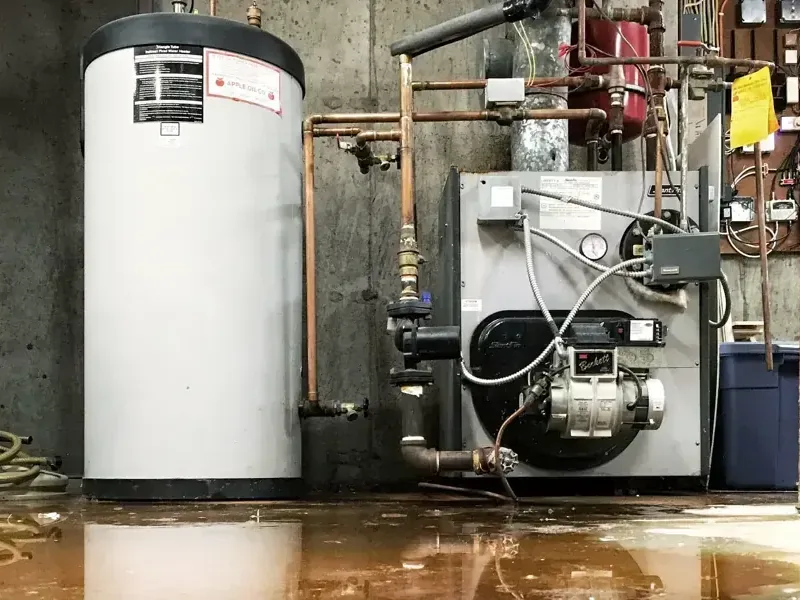
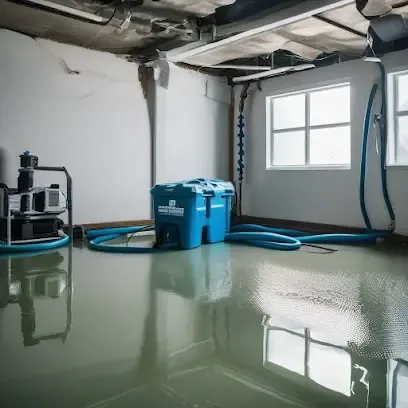
A complete claim file carries the moisture map, daily psychrometric logs, timestamped photos taken before demolition, the category and class of the loss, and a line-item scope.
A sudden pipe break, a sump overflow and rising flood water are often treated differently: sump and sewer backup usually need a water backup endorsement, and outside flood water needs a flood policy. Coverage depends on your policy, so check with your own insurer.
Supply pipes, frozen pipe splits and water heaters, usually dried in place when caught early.
Washer and dishwasher discharge or a toilet overflow with urine only. The crew cleans or pulls soaked pad and drywall.
Sewage, floor drain backups and outside flood water. Porous materials come out before drying starts.
See sewage backup cleanupFrom Livingston Park and Adams to Red Lion and Farrington Lake, the restoration team takes calls from every street in the township, day and night.
The whole township shares ZIP 08902. Street not listed below? Call anyway: coverage reaches every block and the towns next door.
See every neighborhood and nearby townCall the toll-free number at any hour, say where the water is coming from and which floors are wet, and the response team gets extraction moving.
Most homes here went up after 1960, many over basements, on red shale and clay ground that drains slowly. Cold winters and heavy summer rain do the rest.
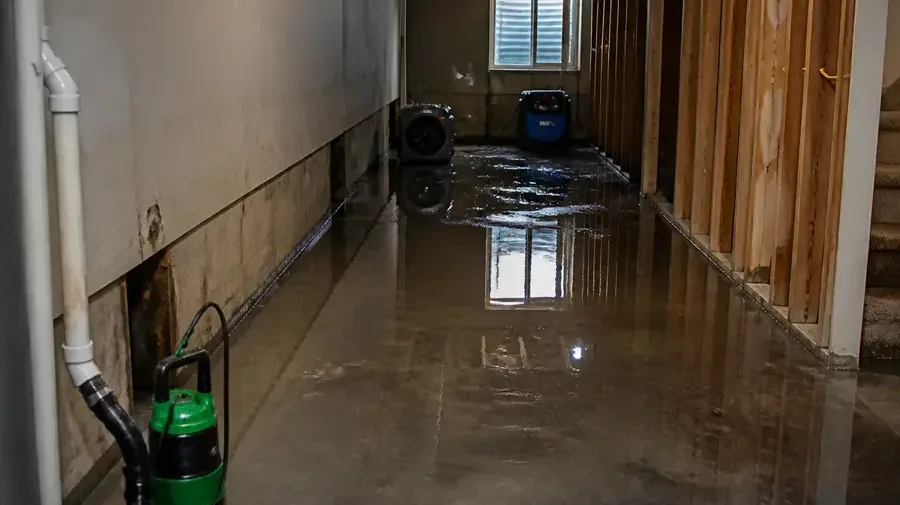
Dispatch runs 24/7 and treats active water as urgent. Timing depends on how many calls come in during a storm, so ask when you call.
A sudden pipe or water heater burst is often covered. Sump overflow and sewer backup usually need a water backup endorsement, and outside flood water needs a flood policy. Coverage depends on your policy, so check with your own insurer.
Basement seepage after heavy rain, sump pumps that fail or lose power, pipes that freeze in garages and outside walls, aging water heaters and leaks inside shared townhouse walls.
A clean-water basement caught early often dries in three to five days. Block walls, a soaked slab or a long wait before drying can push it past a week. Readings, not the calendar, decide.
The industry standard for water damage restoration: how water is classified by category and class, how drying equipment is sized and how dry is verified.
Mitigation stops the damage from growing: extraction, removal and drying. Repair, such as new drywall, carpet and trim, starts once the structure is verified dry.
When flood water or sewage touched it, when it sags, or when readings stay high after drying starts. A clean-water leak caught early can often be dried in place.
Sewage is Category 3 from the moment it backs up. The cleanup crew removes porous materials it touched, cleans and treats surfaces with an EPA-registered antimicrobial, and only then starts drying.
Stay out of the water if it could reach outlets or the furnace, shut off the water if a pipe is the source, take photos, then call. Moving boxes up off the floor helps if it is safe.
By the water category, the wet square footage, the material class and how quickly drying started. The cost calculator gives a planning range.
Water still spreading while you read this? Call (888) 471-9821.
The response team asks what is wet and where the water came from, then gets extraction started.