Rapid local response
Dispatch runs 24/7, and active water is treated as urgent on nights, weekends and holidays.
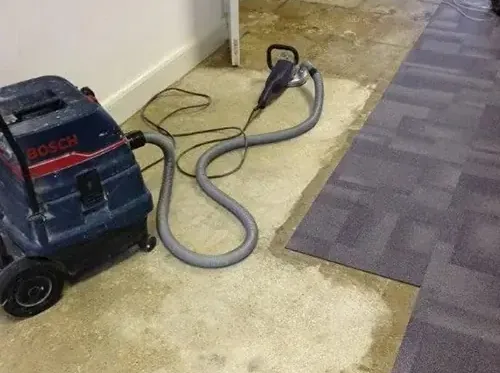
Every hour standing water sits, more of it wicks into pad, drywall and framing. The extraction crew pulls it out with truck-mounted units first, so the drying equipment has far less to fight.
(888) 471-9821Get the standing water pumped out nowShut the main valve or the appliance supply if a pipe is feeding the water.
Keep out of standing water that could reach outlets, cords or the furnace.
Capture the depth and the rooms before anything is moved.
Move rugs, boxes and electronics up off the wet floor.
Independent restoration contractors do the work. This is how a proper job runs, so you know what to expect and what to ask for.
Dispatch runs 24/7, and active water is treated as urgent on nights, weekends and holidays.
The drying team maps moisture first, then dries the structure until the readings say dry.
Daily moisture readings and timestamped photos taken before demolition, the file an adjuster asks for.
Basements, sump pits, frozen pipes in cold snaps and heavy summer downpours are everyday calls here.
Water extraction usually runs $500 to $2,500 for one or two rooms and $2,500 to $6,000 for a fully flooded basement, before any drying, depending on the water category, the square footage and the flooring.
Ranges are typical, not a quote: the water category, the wet square footage, the material class and how fast drying started move the number most. Run the water damage cost calculator for a closer planning range.
Meters and thermal imaging show where the water traveled.
Submersible pumps for depth, then the truck mount.
Pad and soaked materials come out by category.
Air movers and dehumidifiers go in the same visit.
Extraction is the first and cheapest part of any water damage job. Removing water as liquid takes a fraction of the effort it takes to evaporate it later, so extraction crews in North Brunswick work every wet floor hard before a single air mover goes down.
A truck-mounted unit pulls standing water off hard floors and out of the top layers of carpet quickly. What it cannot reach is the water already inside drywall, framing, block walls and the slab.
The rest comes out through structural drying, which is why the tech who does the walkthrough maps moisture before and after extraction.
When a basement holds more than an inch or two of water, the extraction crew starts with submersible pumps and routes the discharge hose outside, well away from the foundation. The truck mount follows for the last of the water on the slab and in the carpet.
The extraction crew checks a clogged floor drain or an overwhelmed sump pit at the same time, because pumping out a basement that is still taking water only buys a few hours.
Weighted extraction tools press water out of carpet and pad far better than a wand alone. Clean-water carpet caught early is often saved, while pad usually comes up because it holds water like a sponge.
If water is near outlets, the furnace or the electrical panel, stay out and follow the flood safety steps from Ready.gov. The National Weather Service flood safety page explains why even shallow moving water is dangerous.
Coverage runs across ZIP 08902, from Livingston Park, Adams and Black Horse to the homes along Georges Road and around Farrington Lake, plus the Route 1 and Route 130 corridors.
Nearby coverage reaches New Brunswick, Milltown, East Brunswick, South Brunswick, Franklin Township, Highland Park, Manville, Bound Brook.
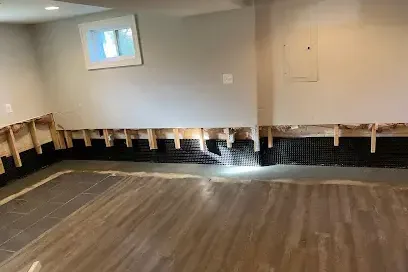 Basement Flooding CleanupFinished and unfinished basements pumped out, carpet and wall bottoms opened, the slab dried.Read the full rundown
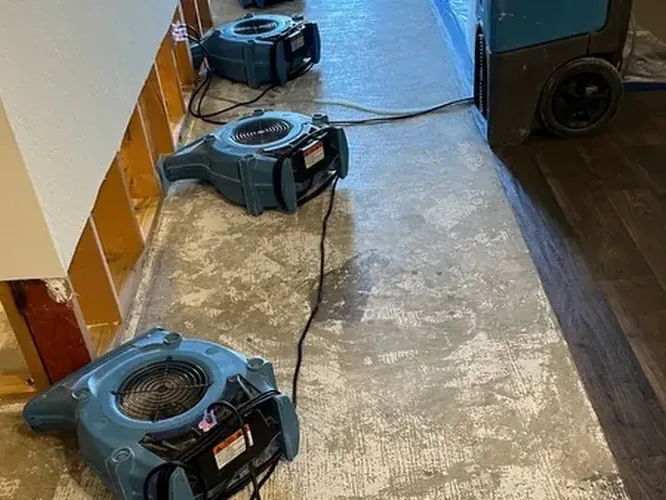 Structural Drying and DehumidificationFraming, subfloor, block walls and slab dried to within 2 to 4 points of a dry reference.Read the full rundown
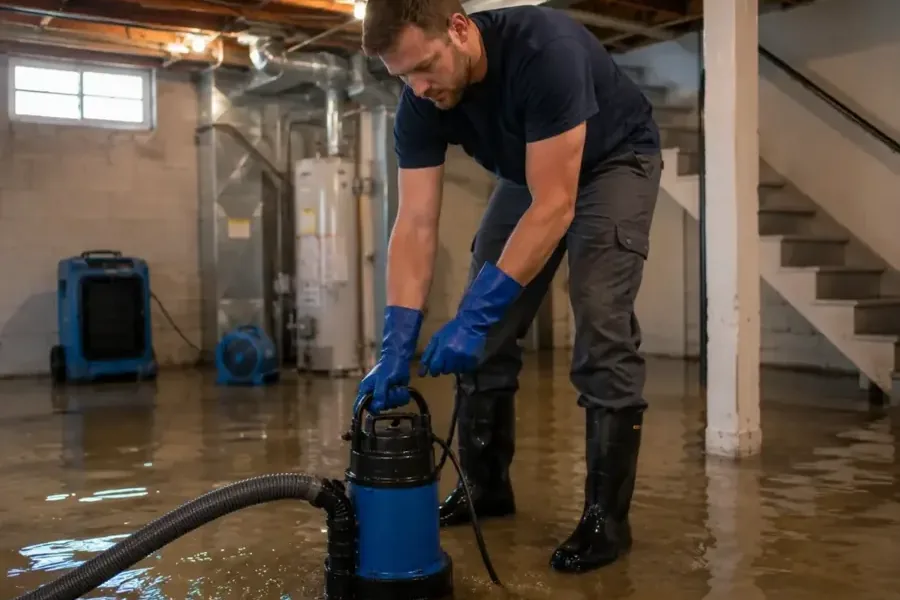 Sump Pump Failure CleanupOverflowing pits, dead pumps and power-outage backups extracted and dried before the walls wick.Read the full rundown
Most rooms go quickly once the equipment is in place. A flooded basement with deep water takes longer, because the pumps have to lower the water before the truck mount can finish.
A shop vacuum removes surface water slowly and leaves most of the water in carpet and pad. Truck-mounted units pull far more water per pass, which shortens drying.
Not always. Clean-water carpet extracted early is often saved, though the pad usually comes up. Carpet soaked by flood water or sewage comes out.
No. Extraction removes liquid water, but drywall, framing and the slab still hold moisture that only structural drying removes.
The extraction crew checks the sump pit and floor drain first, because pumping out a basement that is still flooding only helps for a short time.
When the water came from a covered event, such as a sudden pipe break, extraction is usually part of the claim. Coverage depends on your policy, so check with your own insurer.
Water still standing on the floor? Call (888) 471-9821.
The extraction crew pumps the water, maps the moisture and sets up drying, 24/7.