Rapid local response
Dispatch runs 24/7, and active water is treated as urgent on nights, weekends and holidays.
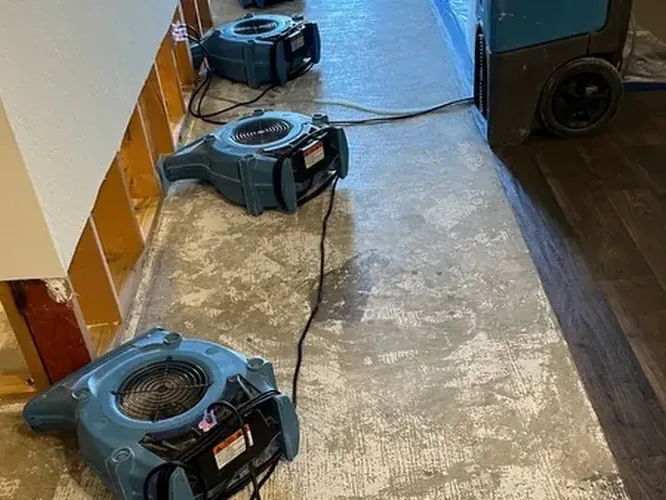
Surfaces can feel dry while the framing, the slab and the wall cavities still hold water. The drying team sets air movers and dehumidifiers by room volume and runs them until the readings match a dry reference.
(888) 471-9821Walls still wet inside? Call the drying teamDrying works only after extraction has taken the surface water out.
Open windows let humid air back in, so keep them shut while equipment runs.
Moving or unplugging a unit changes the drying plan.
The team returns to read moisture and adjust the setup.
Independent restoration contractors do the work. This is how a proper job runs, so you know what to expect and what to ask for.
Dispatch runs 24/7, and active water is treated as urgent on nights, weekends and holidays.
The drying team maps moisture first, then dries the structure until the readings say dry.
Daily moisture readings and timestamped photos taken before demolition, the file an adjuster asks for.
Basements, sump pits, frozen pipes in cold snaps and heavy summer downpours are everyday calls here.
Structural drying runs $1,000 to $2,500 for Class 1 or 2, $2,500 to $5,000 for Class 3 and $5,000 to $8,000 or more for Class 4 slab and block.
Ranges are typical, not a quote: the water category, the wet square footage, the material class and how fast drying started move the number most. Run the water damage cost calculator for a closer planning range.
Water category and class set the equipment plan.
Air movers and dehumidifiers go in by room volume.
Temperature, humidity and moisture are recorded daily.
Units shift as areas dry and leave when readings match.
Drying is a measured process, not a guess. Water is classified by how much has soaked in and how fast it can evaporate, and equipment is chosen to match, then adjusted as the readings change.
The borough's early houses, such as the Livingston Manor houses built from 1906 to 1925, are older construction, and drying them is done with equipment and monitoring rather than by guessing. The Livingston Manor Historic District was listed on the New Jersey Register of Historic Places on April 1, 2004, and on the National Register on July 7, 2004, so saving original materials is worth the extra care.
The class describes how much water the materials took on, from Class 1 for a small area up to Class 4 for dense materials such as slab and block.
The drying team logs temperature, humidity and moisture each day, moves equipment as the structure dries and removes it only when wet materials match a dry reference. Wet cavities after a pipe break fall under burst pipe water damage, and standing water comes out first through water extraction.
A surface that feels dry can still hide wet framing, and trapped moisture invites mold within 24 to 48 hours. The log is the proof that the drying finished.
Drying equipment goes into homes across the borough, from Livingston Manor and Riverview Terrace to the apartment buildings and the area around Raritan Park Terrace.
The same service nearby: structural drying and dehumidification in North Brunswick, New Brunswick, Milltown.
Water damage restoration in Highland Park · every town covered
 Water Extraction and Removal in Highland ParkStanding water pulled out with truck-mounted units before it wicks into pad, drywall and framing.Read the full rundown
Structural Drying and Dehumidification in North BrunswickFraming, subfloor, block walls and slab dried to within 2 to 4 points of a dry reference.Read the full rundown
Water damage restoration in Highland ParkOpen the town page
Most jobs run three to five days, and dense materials or several wet rooms can take longer. The readings, not the calendar, decide when the equipment can leave.
Moving air and pulling moisture takes power, and the units give off heat. Both stop when the readings say the drying is done.
LGR units suit most wet rooms. Desiccant units pull moisture from dense materials and cold spaces where LGR units slow down.
It lowers the risk a lot. Damp materials can start growing it within 24 to 48 hours, so removing the water and drying to verified readings quickly matters more than any treatment.
No, but the team needs access for daily visits. Equipment should stay plugged in and in place between visits so the readings stay on track.
The equipment does use electricity. The cost is part of any claim, and the drying team logs run time and readings so the insurer can see what was needed.
Still reading wet after a few days? Call (888) 471-9821.
The drying team classifies the loss, sizes the air movers and dehumidifiers to the room and logs readings daily until the structure matches a dry reference.