Rapid local response
Dispatch runs 24/7, and active water is treated as urgent on nights, weekends and holidays.
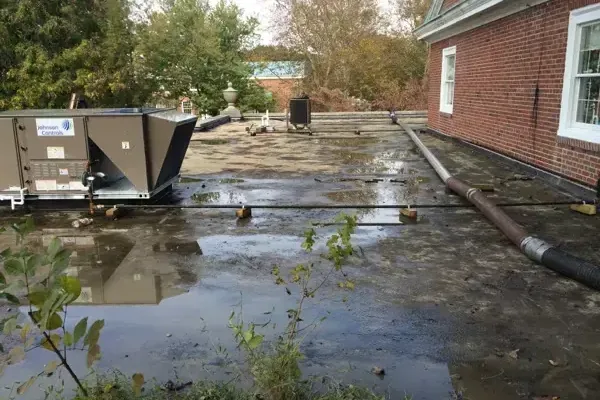
Rain, wind-driven storms and winter ice dams push water past roofing and into attics, insulation and ceilings below. The crew traces the path, removes wet material and dries the structure under the leak so the damage stops growing.
(888) 471-9821Dry the ceiling under the leakSet a bucket and move furniture and electronics out from under the leak.
A ceiling that bulges with water can be punctured at its center to drain into a bucket.
Do not climb a wet or icy roof and leave patching to a roofer.
Capture the stain, the attic and any visible roof damage.
Independent restoration contractors do the work. This is how a proper job runs, so you know what to expect and what to ask for.
Dispatch runs 24/7, and active water is treated as urgent on nights, weekends and holidays.
The drying team maps moisture first, then dries the structure until the readings say dry.
Daily moisture readings and timestamped photos taken before demolition, the file an adjuster asks for.
Basements, sump pits, frozen pipes in cold snaps and heavy summer downpours are everyday calls here.
One ceiling area usually costs $1,000 to $2,500 to dry. When wet attic insulation and ceiling drywall have to come out along with one room, expect $2,500 to $5,000, and several rooms can reach $8,000 or more.
Ranges are typical, not a quote: the water category, the wet square footage, the material class and how fast drying started move the number most. Run the water damage cost calculator for a closer planning range.
A thermal camera and meters follow the water from the stain back to the roof opening.
Soaked insulation and sagging drywall are cut out and bagged.
Air movers and dehumidifiers run through joist bays and walls.
Readings are logged each day until framing and drywall read dry.
Rain falls in every season here, and during Hurricane Irene in August 2011 the National Weather Service recorded 8.02 inches of rain in the city, while trees and wires came down across Middlesex County. Winter adds snow, with February the snowiest month.
Roof water rarely drips where it enters. It runs along rafters and decking before it stains a ceiling, so the crew traces the path with a thermal camera and moisture meter.
Photos of the stain, the attic and the roof opening support the claim.
Ice dams form when snowmelt refreezes at the eaves and backs water up under shingles. Snowfall peaks in February, and the meltwater can reach ceilings and exterior walls.
Air movers and dehumidifiers dry joist bays and ceiling cavities once the wet materials are gone. Plain ceiling stains are handled under ceiling leak water damage, and large losses move to structural drying.
A small brown ring can hide a saturated attic. Checking the insulation early costs less than replacing a ceiling that has stayed wet for weeks.
Roof leak work covers the Fifth Ward, Feaster Park, Lincoln Park and Raritan Gardens, plus buildings near Livingston Avenue and Albany Street, with attic access handled building by building.
The same service nearby: roof leak and ice dam water damage in North Brunswick, Highland Park, Milltown.
Water damage restoration in New Brunswick · every town covered
 Ceiling Leak Water Damage in New BrunswickBathroom, supply and drain leaks from the floor above, with the drywall opened safely.Read the full rundown
Roof Leak and Ice Dam Water Damage in North BrunswickWind-driven rain and ice dams that soak attic insulation and ceilings, traced and dried.Read the full rundown
Water damage restoration in New BrunswickOpen the town page
Many policies cover sudden storm damage to the interior but not worn roofing, so the cause matters. Photos and a roofer's repair note help the claim.
Usually not. Soaked insulation loses its value and holds moisture against the framing, so it is removed and replaced after drying.
Ice builds along the eaves when snowmelt refreezes, trapping water behind it. That water backs up under shingles and runs into the attic and ceilings.
Most ceilings and joist bays need three to five days, and longer when insulation stayed soaked or the leak ran for weeks.
If it sags, bulges or drips, yes. A stain with a firm surface can sometimes be dried through small openings, which a moisture check will confirm.
Rain coming through the ceiling? (888) 471-9821.
The drying team traces the leak, removes wet insulation and sets equipment as soon as the crew reaches the attic access.