Rapid local response
Dispatch runs 24/7, and active water is treated as urgent on nights, weekends and holidays.
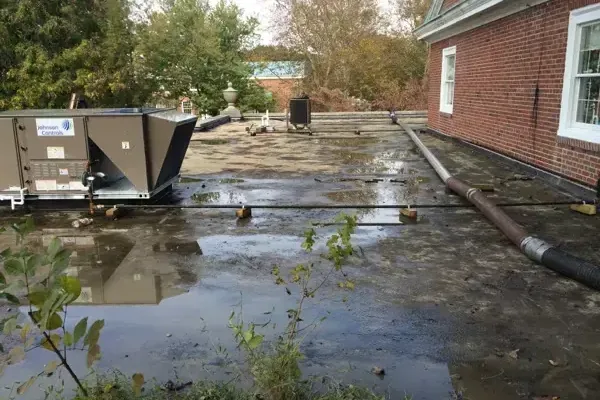
Wind-driven rain and ice dams push water under shingles and into the attic, where insulation soaks and the leak spreads to ceilings and walls. The drying team dries what the water reached and documents it for the roof claim.
(888) 471-9821Ceiling stained after a storm? Call nowSet out buckets and move furniture, and stay out from under a bulging ceiling.
The roof has to be sealed or tarped so the leak stops feeding the damage.
Do not switch on lights or fans where water is dripping.
Capture the ceiling, the attic and any belongings that got wet.
Independent restoration contractors do the work. This is how a proper job runs, so you know what to expect and what to ask for.
Dispatch runs 24/7, and active water is treated as urgent on nights, weekends and holidays.
The drying team maps moisture first, then dries the structure until the readings say dry.
Daily moisture readings and timestamped photos taken before demolition, the file an adjuster asks for.
Basements, sump pits, frozen pipes in cold snaps and heavy summer downpours are everyday calls here.
Roof leak water damage typically runs $1,000 to $2,500 for one ceiling area, $2,500 to $5,000 when the attic and one room are wet and $5,000 to $8,000 or more when several rooms are affected.
Ranges are typical, not a quote: the water category, the wet square footage, the material class and how fast drying started move the number most. Run the water damage cost calculator for a closer planning range.
Wet insulation and the leak path are found first.
Soaked drywall is cut out in sections.
Air movers and LGR units run in the cavities.
Equipment stays until readings match dry.
Water from a roof leak rarely stays where it enters. It runs along rafters, soaks attic insulation and appears as a stain on a ceiling far from the damaged shingle or flashing.
Wind-driven rain gets under shingles and flashing that look fine from the ground. Ice dams form when snow melts on a warm roof and refreezes at the cold edge, pushing meltwater back up under the shingles. Cold snaps that also split pipes fall under frozen pipe water damage.
The borough's older houses, such as those built in Livingston Manor between 1906 and 1925, are as exposed as any other, and the work is the same: find how far the water traveled, then open only what is wet.
Wet attic insulation holds water against the ceiling below, so it is removed first. Ceiling drywall that sagged is cut out in controlled sections, and the joist bays are dried with air movers and LGR dehumidifiers.
A ceiling that stained but never sagged follows the steps in ceiling leak water damage.
A roofer stops the water from entering. The drying team dries what already got in. Both steps matter, and photos taken before demolition support the claim.
Roof leak calls cover the whole borough, from the older houses of Livingston Manor to homes around Raritan Avenue and Woodbridge Avenue and the Viehmann Tract.
The same service nearby: roof leak and ice dam water damage in North Brunswick, New Brunswick, Milltown.
Water damage restoration in Highland Park · every town covered
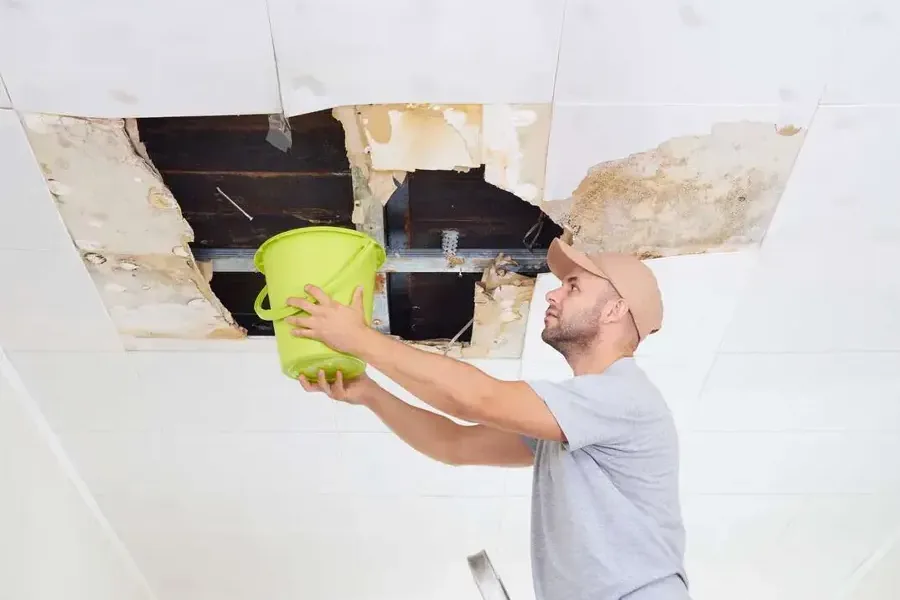 Ceiling Leak Water Damage in Highland ParkBathroom, supply and drain leaks from the floor above, with the drywall opened safely.Read the full rundown
Roof Leak and Ice Dam Water Damage in North BrunswickWind-driven rain and ice dams that soak attic insulation and ceilings, traced and dried.Read the full rundown
Water damage restoration in Highland ParkOpen the town page
Roof leaks usually show up after rain or a thaw and often start at the top floor. Plumbing leaks follow their own schedule and often sit below a bathroom or kitchen.
A ridge of ice at the roof edge. It blocks meltwater from draining, so the water backs up under shingles and into the attic.
Sudden storm damage is often covered, while wear and neglected maintenance usually are not. The roof repair estimate and the drying records both help the claim.
Rarely. Wet insulation traps water against the ceiling below, so it is usually removed and replaced after the structure is dry.
As soon as it sags or the readings stay high. Waiting lets water pool in the drywall and spread into the framing.
Water still dripping from above? Call (888) 471-9821.
The drying team checks the attic, removes soaked insulation and ceiling drywall, dries the cavities and records the damage for the claim.