Rapid local response
Dispatch runs 24/7, and active water is treated as urgent on nights, weekends and holidays.
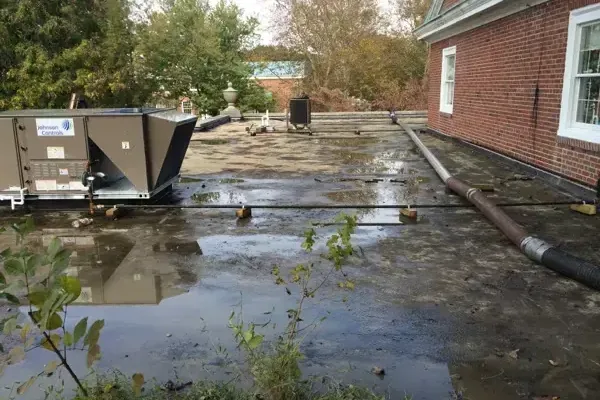
Rain and melting snow find their way past flashing, shingles and ice dams, then spread through the attic before a stain shows. The mitigation team dries the insulation, ceiling and walls the roof leak soaked.
(888) 471-9821Call about a leaking roof and a stained ceilingBuckets and plastic sheeting keep water off floors and furniture.
Roofers can tarp the leak, which stops new water from entering.
Move furniture away from bulging ceilings, which can fail without warning.
Pictures of the ceiling, the attic and the roof support the claim.
Independent restoration contractors do the work. This is how a proper job runs, so you know what to expect and what to ask for.
Dispatch runs 24/7, and active water is treated as urgent on nights, weekends and holidays.
The drying team maps moisture first, then dries the structure until the readings say dry.
Daily moisture readings and timestamped photos taken before demolition, the file an adjuster asks for.
Basements, sump pits, frozen pipes in cold snaps and heavy summer downpours are everyday calls here.
Roof leak and ice dam interior work runs from $1,000 for one ceiling area to $8,000 or more when the attic and several rooms are wet, and the roof repair itself is a separate roofing cost.
Ranges are typical, not a quote: the water category, the wet square footage, the material class and how fast drying started move the number most. Run the water damage cost calculator for a closer planning range.
Moisture meters and a thermal camera find where water collected.
Soaked insulation and failing ceiling sections come out.
Air movers push warm, dry air into joist bays and walls.
Final readings and photos close out the file.
A roof leak starts quietly. Water runs along rafters and soaks attic insulation for days, and by the time a ceiling stains, the damage is usually wider than the stain suggests.
The borough has a humid continental climate, with cold winters and storm seasons. During Hurricane Irene on August 28, 2011, trees and wires were reported down across Middlesex County, and a winter storm in February 2010 ranked among the area's greatest snow events on record. Both are regional records, not local damage reports.
After a storm, the drying team checks the attic first, because that is where the water settles.
The roofer fixes the opening, and the restoration team handles everything below it. Wet insulation is removed because it holds water against the ceiling, and drywall that sags or stains through is cut out.
Dehumidifiers and air movers then dry what stays, following the process under structural drying.
Carriers generally cover interior damage from a sudden roof opening and often exclude long-term wear, so dated photos of the attic, the stain and the readings help show which it was. Ceiling-level repairs are covered under ceiling leak water damage.
Water that pools on a flat section keeps pressing on one seam, so repeat leaks often return to the same ceiling spot until the roof is corrected.
Roof leak cleanup covers the whole borough, from the area around Lafayette and Sherman Avenue, near Michelin Field and Park, to the blocks by Albert Avenue Park.
The same service nearby: roof leak and ice dam water damage in North Brunswick, New Brunswick, Highland Park.
 Ceiling Leak Water Damage in MilltownBathroom, supply and drain leaks from the floor above, with the drywall opened safely.Read the full rundown
Roof Leak and Ice Dam Water Damage in North BrunswickWind-driven rain and ice dams that soak attic insulation and ceilings, traced and dried.Read the full rundown
Water damage restoration in MilltownOpen the town page
A roofer repairs the opening, while the restoration team removes wet insulation and drywall and dries the interior, so the two jobs run side by side.
Ice builds along the roof edge, blocks meltwater from draining and forces it back under the shingles and into the attic, where it soaks insulation and ceilings.
Rarely. Water spreads sideways through insulation before it shows, so a stain the size of a plate can sit above a much larger wet area.
It can if the attic and ceiling stay damp past the first day or two, which is the reason drying starts before the roof is fully repaired.
Wind-driven rain pushes water sideways under flashing and shingles that stay dry in light showers, so the leak appears only in a strong storm and can run unnoticed for a while.
Ceiling stained after the storm? (888) 471-9821.
The mitigation team checks the attic, removes soaked insulation and ceilings, and dries the framing while the roofer handles the repair.