Rapid local response
Dispatch runs 24/7, and active water is treated as urgent on nights, weekends and holidays.
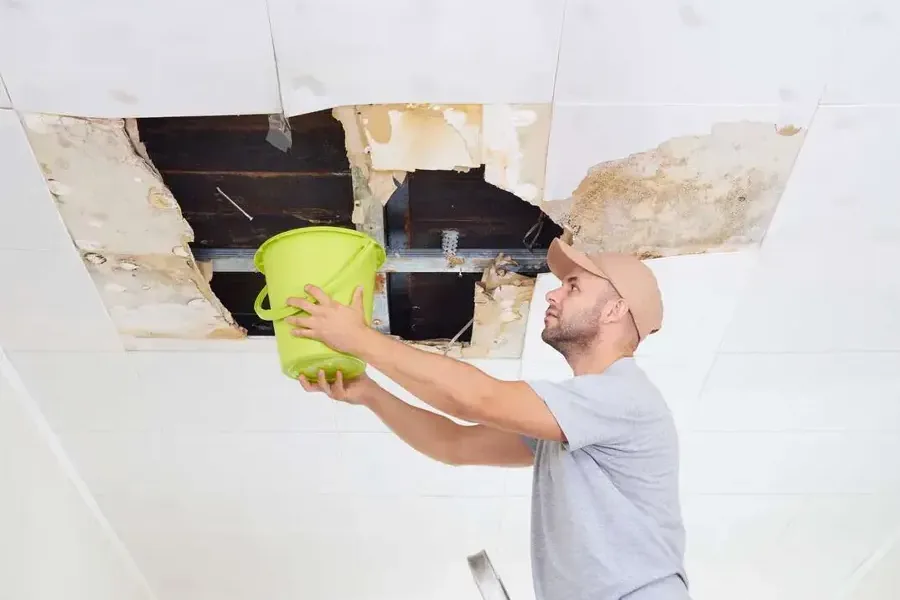
In a multi-unit building a wet ceiling usually means a problem in the unit upstairs, and the water rarely stops at the drywall. The drying team traces the source, opens the ceiling in a controlled way and dries every cavity it reached.
(888) 471-9821Open and dry the wet ceilingTurn off breakers for fixtures under the wet ceiling.
Set buckets and move furniture, rugs and electronics away from the leak.
Ask neighbors upstairs to shut off water and check their fixtures.
Take dated photos of the ceiling, the floor below and the damaged items.
Independent restoration contractors do the work. This is how a proper job runs, so you know what to expect and what to ask for.
Dispatch runs 24/7, and active water is treated as urgent on nights, weekends and holidays.
The drying team maps moisture first, then dries the structure until the readings say dry.
Daily moisture readings and timestamped photos taken before demolition, the file an adjuster asks for.
Basements, sump pits, frozen pipes in cold snaps and heavy summer downpours are everyday calls here.
A small stain dried in place usually costs $800 to $1,800. Removing a section of ceiling and wet insulation runs $1,800 to $3,800, and two wet levels can reach $6,000 or more.
Ranges are typical, not a quote: the water category, the wet square footage, the material class and how fast drying started move the number most. Run the water damage cost calculator for a closer planning range.
Meters and a thermal camera map the wet path and the source.
The ceiling is cut back in sections to dry, firm material.
Air movers and dehumidifiers run through the cavity and rooms below.
Readings are logged until the joists and drywall are dry.
About 3,348 housing units in the city are in buildings with 50 or more units, and thousands more are in smaller multi-unit buildings, so a ceiling leak often starts in someone else's bathroom or kitchen. The response team treats the stain as a clue, not the whole problem.
A stain on the ceiling marks where water came through, not where it started. Meters and a thermal camera follow the wet path across joist bays.
Occupants upstairs and downstairs should both be told, because both spaces usually need drying.
A bulging ceiling can release a large amount of water at once, so the crew punctures it in a controlled spot and catches the flow. Then drywall is removed in sections.
Ceiling tiles, plaster and textured finishes are handled the same way, section by section.
Joist bays hold water for days, so air movers and dehumidifiers work on the ceiling cavity, the floor above if it is wet and the wall tops beside it. If the leak began with a pipe, see burst pipe water damage, and if it came from the roof, see roof leak and ice dam water damage.
A light fixture holding water is a shock hazard. Switch it off at the breaker and keep everyone out from under the sagging area until it has drained.
Ceiling leak crews work in downtown towers, around Civic Square and George Street, and across the Fifth Ward, Lincoln Park and Raritan Gardens, in buildings of every size.
The same service nearby: ceiling leak water damage in North Brunswick, Highland Park, Milltown.
Water damage restoration in New Brunswick · every town covered
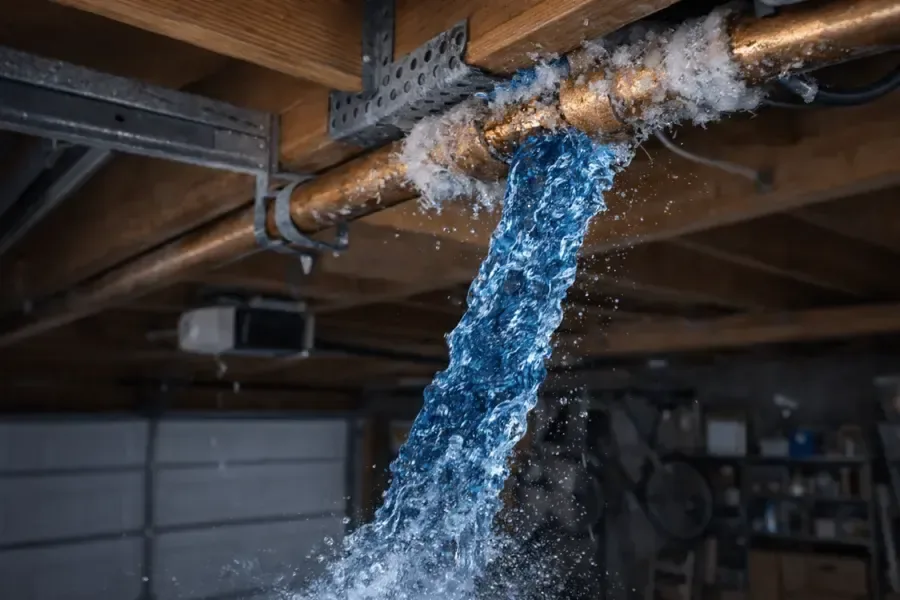 Burst Pipe Water Damage in New BrunswickPressurized supply failures inside walls and ceilings, extracted after the shutoff and dried.Read the full rundown
Ceiling Leak Water Damage in North BrunswickBathroom, supply and drain leaks from the floor above, with the drywall opened safely.Read the full rundown
Water damage restoration in New BrunswickOpen the town page
Most ceiling leaks in apartments come from a plumbing fixture, supply hose or drain in the unit above, or from a shared supply pipe in the wall.
It can be. Wet drywall is heavy and can collapse, so stay out from under it, switch off nearby fixtures and let the crew open it in a controlled way.
That depends on the cause, the lease or the association rules and the policies involved. The crew's photos and moisture notes for each unit give everyone the same facts.
Sometimes. A small, firm stain can be dried through small openings, but a bulging, sagging or long-wet ceiling has to come down in sections.
Most ceiling cavities need three to five days of equipment, and longer when insulation or a floor above stayed wet.
Water coming through a ceiling? (888) 471-9821.
The crew traces the leak, opens the ceiling in sections and sets drying equipment as soon as it reaches the building.