Rapid local response
Dispatch runs 24/7, and active water is treated as urgent on nights, weekends and holidays.
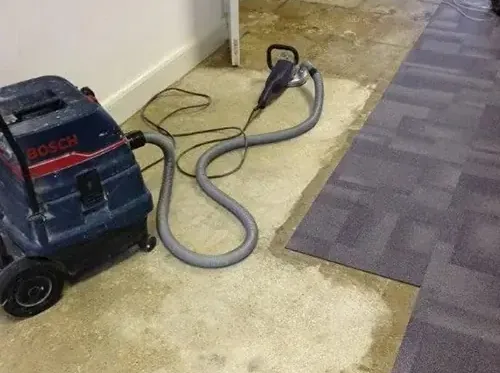
Whether a river flood, a burst pipe or an overflowing pit caused it, truck-mounted extractors and submersible pumps remove standing water from floors, carpet and pad before it can travel.
(888) 471-9821Call for borough pump-out helpThe crew checks floors, cabinets and rooms below for water the eye misses.
Submersible pumps clear anything deeper than a few inches first.
Wands and weighted tools pull water from carpet and pad.
Dated pictures of the high-water mark and affected items support the claim.
Independent restoration contractors do the work. This is how a proper job runs, so you know what to expect and what to ask for.
Dispatch runs 24/7, and active water is treated as urgent on nights, weekends and holidays.
The drying team maps moisture first, then dries the structure until the readings say dry.
Daily moisture readings and timestamped photos taken before demolition, the file an adjuster asks for.
Basements, sump pits, frozen pipes in cold snaps and heavy summer downpours are everyday calls here.
Extraction alone usually runs $500 to $1,500 for one or two rooms and $2,500 to $6,000 for a flooded basement, depending on depth, area and whether the water is contaminated. Drying afterward is scoped on its own.
Ranges are typical, not a quote: the water category, the wet square footage, the material class and how fast drying started move the number most. Run the water damage cost calculator for a closer planning range.
Submersible pumps clear deep water first.
Wands pull water from carpet, pad and tile joints.
Soaked padding is cut out and hauled away.
Meters decide where air movers and dehumidifiers go next.
Extraction is the first real step in any wet job. The extraction crew pulls water from the surface and from inside carpet and pad, which stops it from wicking into walls and subfloors while the rest of the plan takes shape.
The tool depends on how deep the water is and what it sits on.
Hard floors, tile and slab get squeegee passes and wand work so thin films do not hide under baseboards. A deeper loss pairs with basement flooding cleanup.
The Raritan River gauge set a record crest of 27.66 feet on September 2, 2021, and the Millstone River joins it in the borough. River water leaves silt and contamination behind, so extraction is followed by cleaning and drying, not just pumping.
Surface water is only part of the load. Moisture that soaked into framing and slab stays behind and has to be dealt with next.
Move rugs, small furniture and electronics to a dry level, lift curtains off wet floors, and leave wet carpet where it lies so the full extent stays visible. Water that spreads under baseboards is easy to miss, which is why meters are used afterward.
Pulling out surface water usually leaves floors, pad and framing still holding moisture. Structural drying with dehumidifiers and air movers is what finishes the job.
Extraction crews work throughout the borough, from low Lost Valley streets near the rivers to Main Street shops and upper-floor apartments hit by a leak from above.
The same service nearby: water extraction and removal in North Brunswick, Bound Brook, New Brunswick.
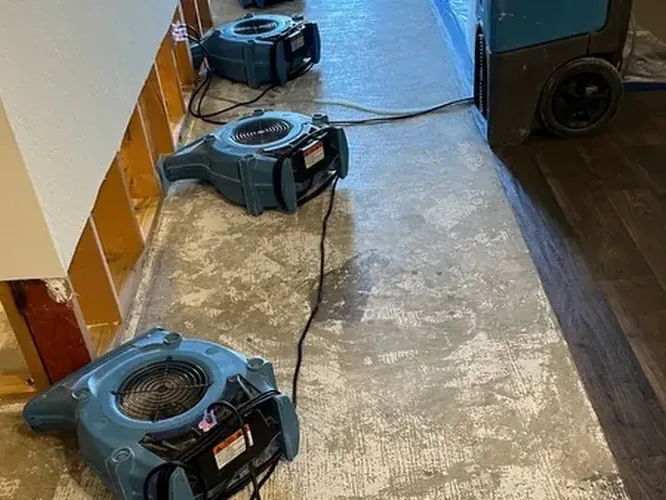 Structural Drying and Dehumidification in ManvilleFraming, subfloor, block walls and slab dried to within 2 to 4 points of a dry reference.Read the full rundown
Water Extraction and Removal in North BrunswickStanding water pulled out with truck-mounted units before it wicks into pad, drywall and framing.Read the full rundown
Water damage restoration in ManvilleOpen the town page
Sooner is better because water keeps moving into drywall, wood and pad. Starting with pumps and extractors limits how far it spreads and how much has to be torn out.
Clean-water carpet can often be extracted and dried in place, but pad is usually replaced. Gray or black water means carpet and pad come out for good and are replaced.
Meters and an infrared camera locate it, and small openings or floor mats let drying reach it. Water left under flooring is a frequent cause of odor, warping and swollen seams.
Yes, but river water carries silt and contamination, so the crew wears protective gear, extracts, cleans surfaces and removes porous materials that cannot be made safe.
No. Extraction removes liquid water. Drying then removes the moisture still in framing and flooring, using dehumidifiers and air movers with daily readings.
Water on the floor? Call any hour. (888) 471-9821.
Pumps, extractors and dryers are ready to go to work on wet floors and walls. Call to set the job in motion.