Rapid local response
Dispatch runs 24/7, and active water is treated as urgent on nights, weekends and holidays.
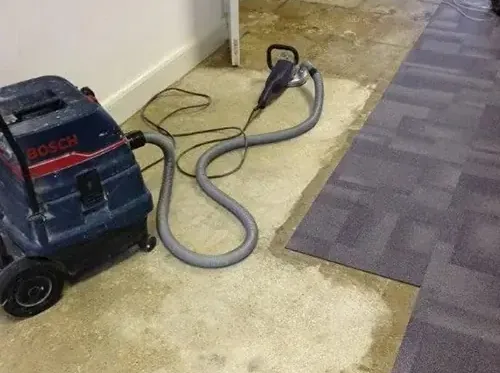
Truck-mounted pumps and weighted wands lift standing water out of floors, carpet and wall bottoms, so drying starts on a structure that is no longer sitting in a puddle.
(888) 471-9821Standing water inside? Call for extractionClose the shutoff valve or switch off the appliance feeding the leak.
Walking spreads water into the pad, and wet floors near outlets can carry current.
Lift boxes, rugs and cords off the floor where the floor is safe to stand on.
Capture the source, the wet rooms and damaged belongings before extraction starts.
Independent restoration contractors do the work. This is how a proper job runs, so you know what to expect and what to ask for.
Dispatch runs 24/7, and active water is treated as urgent on nights, weekends and holidays.
The drying team maps moisture first, then dries the structure until the readings say dry.
Daily moisture readings and timestamped photos taken before demolition, the file an adjuster asks for.
Basements, sump pits, frozen pipes in cold snaps and heavy summer downpours are everyday calls here.
Water extraction in the borough typically runs $500 to $1,500 for one or two rooms and $1,500 to $2,500 for several rooms, climbing to $2,500 to $6,000 once a flooded basement needs pumps and a truck mount.
Ranges are typical, not a quote: the water category, the wet square footage, the material class and how fast drying started move the number most. Run the water damage cost calculator for a closer planning range.
Meters show where the water traveled.
Submersible and truck-mounted units clear the surface.
Wands pull water from carpet, pad and hard floors.
Equipment goes in and readings begin.
Extraction decides how long everything after it takes. Water left in carpet pad, under a floor or inside a wall bottom has to evaporate later, which adds days of dehumidifier time and keeps drywall and framing wet for longer.
The tools depend on how deep the water is and what it is sitting on.
Hard floors get squeegee tools and wet vacuums that reach the gaps between boards and tile.
The borough's early houses, such as the Livingston Manor houses built from 1906 to 1925, are older construction, so the crew checks how far water traveled before choosing what to lift. Renters live in most occupied homes here, since the owner-occupied rate is 40.3 percent, so a spill in one unit often reaches the ceiling or wall of the next.
Clean water turns questionable after a day or two, and damp materials can grow mold within 24 to 48 hours. Once the surface water is gone, the structural drying team takes over, and a flooded lower level is covered under basement flooding cleanup.
Carpet pad soaks up water like a sponge and cannot be dried in place. The extraction crew lifts it as soon as the top carpet is clear, which also protects the floor beneath.
The extraction crew works on both sides of Raritan Avenue, in Livingston Manor, the Viehmann Tract and Riverview Terrace, and along River Road by the Raritan River.
The same service nearby: water extraction and removal in North Brunswick, New Brunswick, Milltown.
Water damage restoration in Highland Park · every town covered
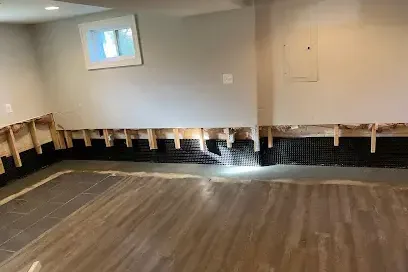 Basement Flooding Cleanup in Highland ParkFinished and unfinished basements pumped out, carpet and wall bottoms opened, the slab dried.Read the full rundown
Water Extraction and Removal in North BrunswickStanding water pulled out with truck-mounted units before it wicks into pad, drywall and framing.Read the full rundown
Water damage restoration in Highland ParkOpen the town page
Enough to clear a flooded room in a short stretch of work, which is why large losses start with it. The exact pace depends on depth, floor type and how much water soaked into pad and framing.
Often, if the water was clean and extraction began promptly. Carpet gets weighted extraction first, and the pad underneath is usually removed because it holds water no machine can fully drain.
Yes. Water from a drain, a toilet or outside flooding is Category 3 and changes the plan, with protective gear, removal of porous materials and cleaning before any drying equipment goes down.
Whoever controls the unit can call, and the crew documents the loss either way. With renters in most occupied homes here, both sides often need the same photos and readings.
The drying team places air movers and LGR dehumidifiers, logs readings each day and removes equipment only when wet materials read dry.
A damp feel is normal for the first day. Meters, not touch, show whether water is still inside the floor or wall bottom, and the readings decide whether more drying is needed.
Is water still standing in the rooms? Call (888) 471-9821.
The extraction crew sets up pumps, pulls what soaked into carpet and floors, and hands the structure to the drying team.