Rapid local response
Dispatch runs 24/7, and active water is treated as urgent on nights, weekends and holidays.
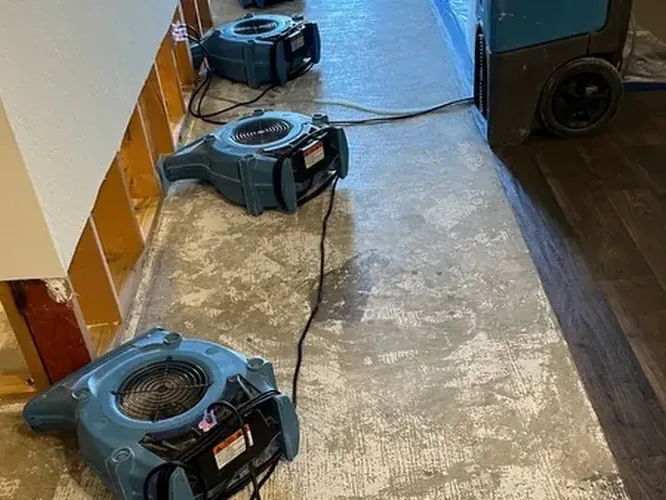
After the water is out, the moisture left in studs, subfloors and masonry is the real problem. The drying team sets air movers and dehumidifiers, takes daily readings and moves equipment until each material reaches its dry target.
(888) 471-9821Call for drying equipment nowExtraction comes before drying, since equipment cannot dry a flooded floor.
Closed rooms let dehumidifiers work against a fixed volume of air.
Turning units off early lets moisture return to the walls.
Keep copies of the daily logs for the record.
Independent restoration contractors do the work. This is how a proper job runs, so you know what to expect and what to ask for.
Dispatch runs 24/7, and active water is treated as urgent on nights, weekends and holidays.
The drying team maps moisture first, then dries the structure until the readings say dry.
Daily moisture readings and timestamped photos taken before demolition, the file an adjuster asks for.
Basements, sump pits, frozen pipes in cold snaps and heavy summer downpours are everyday calls here.
Drying cost follows the class of loss. A small area with surface moisture is the low end, several rooms with wet walls are the middle, and wet slab or block is the top.
Ranges are typical, not a quote: the water category, the wet square footage, the material class and how fast drying started move the number most. Run the water damage cost calculator for a closer planning range.
Moisture content and humidity set the baseline.
Air movers and dehumidifiers are matched to the room.
Each visit logs the numbers and moves gear.
Equipment leaves at the dry target.
Standing water is only half of a flood. Wet framing, subfloors and masonry keep releasing moisture into the air for days, and drying them on purpose, with equipment and measurements, is what keeps a repair from failing later.
The southern part of the borough, downtown included, is a low-lying natural flood plain of the Raritan River, with a record that includes Hurricane Floyd in 1999. Flooded structures here need proper drying, not just a fan.
The drying team sizes equipment from the room volume and the wet area, places air movers to sweep every wet surface, and runs dehumidifiers matched to the class of loss.
Pumping comes first, as laid out in water extraction.
Each visit records humidity, temperature and moisture content so the trend is clear to owners and adjusters alike. Equipment is moved as areas dry, and it leaves only when every material reaches its dry target. Flooded lower levels get the same readings in basement flooding cleanup.
Fans move moist air around a room. Dehumidifiers remove the moisture from it, and without them the water just moves from the wall into the air and back again.
Drying equipment goes to buildings across the borough, from downtown and Main Street to the area around East Second Street, Hamilton Street, Mountain Avenue and Vosseler Avenue.
The same service nearby: structural drying and dehumidification in North Brunswick, Manville, Highland Park.
Water damage restoration in Bound Brook · every town covered
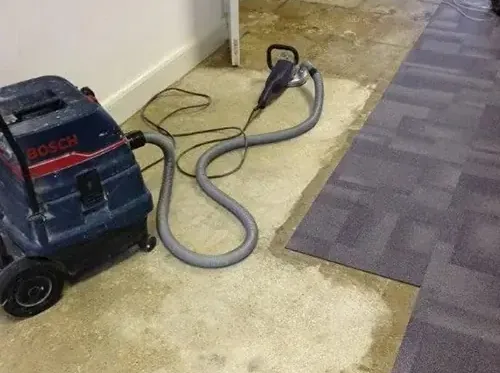 Water Extraction and Removal in Bound BrookStanding water pulled out with truck-mounted units before it wicks into pad, drywall and framing.Read the full rundown
Structural Drying and Dehumidification in North BrunswickFraming, subfloor, block walls and slab dried to within 2 to 4 points of a dry reference.Read the full rundown
Water damage restoration in Bound BrookOpen the town page
Many jobs need several days, and dense materials, soaked framing or flooding can take longer. Daily readings decide, not a calendar.
Class 1 and 2 are small, mostly surface wet areas. Class 3 means water soaked walls and insulation. Class 4 covers dense materials like slab and block.
No. Air movers speed the release of moisture from surfaces, and dehumidifiers remove it from the air. The two work together.
Moisture trapped in framing, subfloors and masonry moves slowly. Cutting the run short leaves dampness behind that later causes odors and mold.
Fans and dehumidifiers run day and night and add some noise and warmth, which the crew manages through placement.
Meters compare each material to a dry reference reading from an unaffected area, and equipment leaves only when the numbers match.
Building still wet? Call now, any hour. (888) 471-9821.
The drying team sets air movers and dehumidifiers by the numbers, logs daily readings and removes equipment only when every material reaches its dry target.