Rapid local response
Dispatch runs 24/7, and active water is treated as urgent on nights, weekends and holidays.
Storm runoff, a backed-up drain or a split pipe can put inches of water on a lower level. The cleanup crew pumps it down, removes what cannot dry and runs equipment until the readings clear.
(888) 471-9821Get the lower level pumped outDo not enter standing water near outlets, cords or a panel.
Close valves if a pipe is leaking, and move belongings off the floor.
Deep water should be lowered in stages, so leave the pump-out to the crew.
Take wide and close photos of the depth and the damaged items.
Independent restoration contractors do the work. This is how a proper job runs, so you know what to expect and what to ask for.
Dispatch runs 24/7, and active water is treated as urgent on nights, weekends and holidays.
The drying team maps moisture first, then dries the structure until the readings say dry.
Daily moisture readings and timestamped photos taken before demolition, the file an adjuster asks for.
Basements, sump pits, frozen pipes in cold snaps and heavy summer downpours are everyday calls here.
An unfinished basement usually costs $3,000 to $5,500 to clean and dry. Finished space or flood water raises the range to $9,000 to $15,000 or more.
Ranges are typical, not a quote: the water category, the wet square footage, the material class and how fast drying started move the number most. Run the water damage cost calculator for a closer planning range.
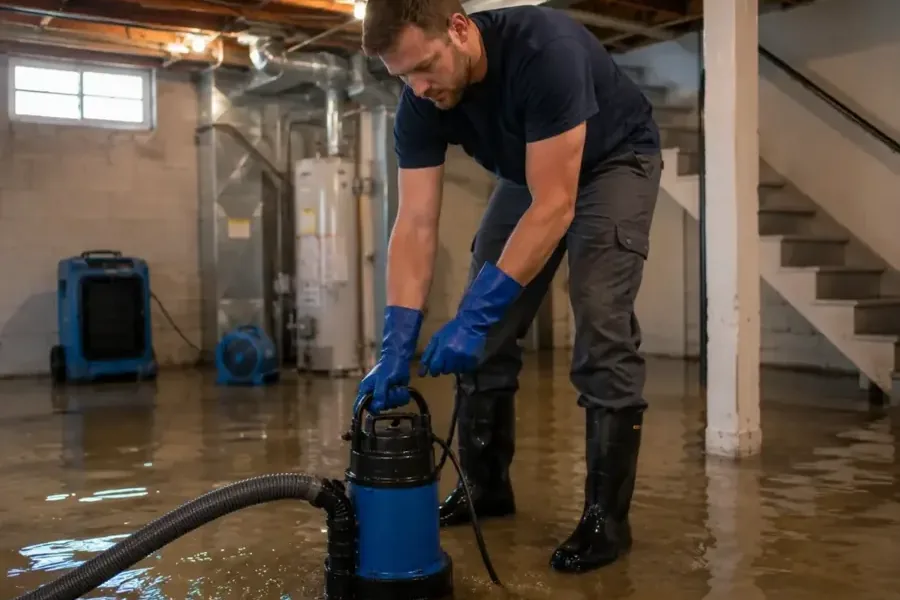
Deep water is lowered in stages.
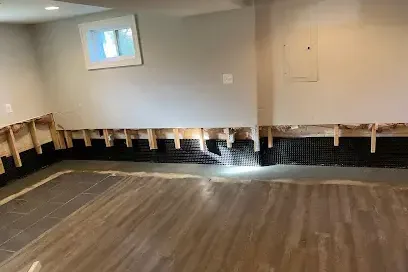
Wet carpet, pad and low drywall come out.
Dehumidifiers and air movers run on floors and walls.
Daily readings continue until every surface is dry.
The July 18, 2023 flash flood put water at the front doors of homes on Drift Street, and at some of them part of the basement walls caved in. That is the extreme end, but any lower level that takes on water needs a plan for pumping, removal and drying.
Deep water is lowered in stages rather than all at once, which keeps the pressure on walls and floors from shifting suddenly.
Photos of the water depth and the damaged items are taken before anything leaves the room.
Clean-water leaks leave more behind to dry in place. Storm or drain water does not, because porous finishes that touched it are discarded, and sewer water follows sewage backup cleanup steps.
Finished spaces cost more to restore, which is why the scope is written room by room.
LGR dehumidifiers pull moisture from the air while air movers push dry air across concrete and framing. Desiccant units join them when water has soaked deep or when summer humidity stalls drying. Daily readings show when each material is dry, and a sump pump failure follows the same plan.
Water that entered from outside, or came up through a floor drain, is treated as contaminated. Porous finishes it touched are removed and hard surfaces are cleaned and sanitized before drying starts.
The cleanup crew covers the Fifth Ward, Lincoln Park, Feaster Park and Raritan Gardens, plus the Drift Street area hit by the 2023 flood and the blocks near Livingston Avenue.
The same service nearby: basement flooding cleanup in North Brunswick, Highland Park, Milltown.
Water damage restoration in New Brunswick · every town covered
 Sump Pump Failure Cleanup in New BrunswickOverflowing pits, dead pumps and power-outage backups extracted and dried before the walls wick.Read the full rundown
Basement Flooding Cleanup in North BrunswickFinished and unfinished basements pumped out, carpet and wall bottoms opened, the slab dried.Read the full rundown
Water damage restoration in New BrunswickOpen the town page
Water should be removed as soon as it is safe, but deep water is lowered in stages. Fast extraction still matters because drywall and carpet start deteriorating quickly.
Water that came from outside, a floor drain or a sewer is Category 3. Water from a clean supply pipe is Category 1, though it can degrade if left sitting.
It depends on the source. Sudden pipe or appliance water is commonly covered, sewer backup needs an endorsement and rising flood water needs flood coverage.
Wet carpet and pad, baseboards and drywall up to a point above the wet mark. Cabinets and trim are checked case by case, and anything saturated is removed to protect the rest.
Most lower levels need about three to five days of equipment, and longer when water soaked concrete, carpet or several wall sections.
Fast drying is the best prevention. Mold can begin in 24 to 48 hours on damp materials, so wet drywall and carpet are removed and the rest is dried to target readings.
Water in the lower level? (888) 471-9821.
Submersible pumps, extractors and dehumidifiers go to work as soon as the crew reaches the property and checks for electrical hazards.