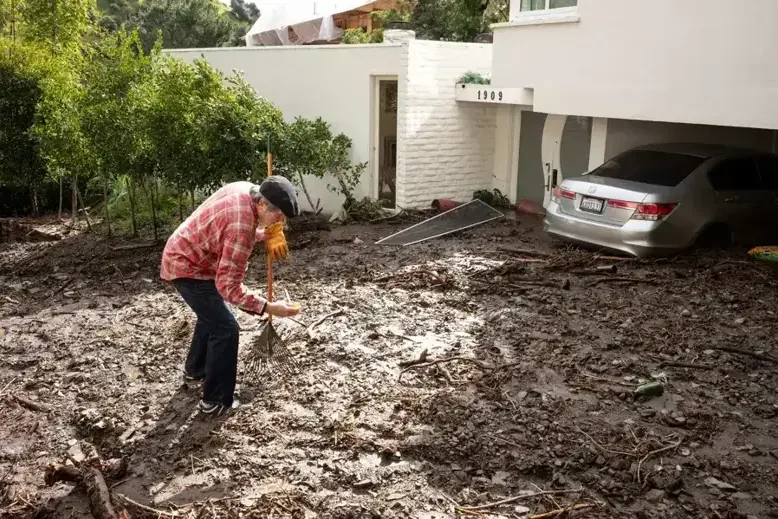
Lawrence Brook runs through the center of Milltown, and a dam under Main Street holds it back to form the Mill Pond. When a high intensity storm fills both, water can reach homes and shops in the central part of the borough quickly.
Key takeaways
- The borough's own 2019 Utility Service Plan Element says high intensity storms have caused catastrophic flooding in the central part of town near the Mill Pond and Lawrence Brook.
- Brook and pond water is handled as contaminated from the start, so porous materials that stay wet are removed rather than saved.
- Standing water comes out before anything else, and drying equipment follows once the crew has moisture readings.
- The borough is one of ten Southern Middlesex County municipalities in a FEMA-funded flooding study with a flood map where past flooding can be reported.
- Dates, depths and photos recorded while the water is fresh make a report to that study, and any claim, more accurate.
Why central Milltown sees flood water
Lawrence Brook leaves Farrington Lake upstream of the borough and is a tributary of the Raritan River. Inside the borough it passes through the center of town, and the dam under Main Street creates the Mill Pond.
The 2019 plan reports catastrophic storm flooding in the central part of the borough near the Mill Pond and Lawrence Brook. It also describes projects to move the electrical substation and the Public Works facility out of the flood zone.
The same plan recommends working with Middlesex County on storm drainage improvements along North Main Street.
A Lawrence Brook watershed group founded in 1997 covers Milltown, North Brunswick, South Brunswick, East Brunswick and New Brunswick, so the brook is shared by several communities.
The first day in order
These steps follow the order that keeps people safe and the loss small.
- Power off to the affected level, switched from a dry spot.
- Photos of the water level inside and outside.
- Valuables and papers lifted above the water.
- Standing water pumped out by the extraction crew.
- Wet porous materials sorted and removed.
- Drying equipment set and moisture readings started.
- Daily readings until every material is dry.
First moves when water reaches a building
The first decisions are about safety, then about contamination.
Safety and power
Water that has touched outlets, panels or appliances makes a space unsafe to enter until the power is off. Boots and gloves are the minimum, and people and pets stay out of the water.
Treat brook water as contaminated
Brook and pond water carries silt, runoff and sometimes sewage. For that reason flash flood cleanup treats the water as contaminated from the start.
Wet carpet, pad and soaked drywall are usually removed, not dried.
What an owner can do while waiting
A few notes and photos taken now save guesswork later.
- Photograph the water level inside and outside the building.
- Write down the date and time the water first reached the building and where it entered.
- Lift papers, electronics and valuables above the water.
- Leave soaked items where they are until the crew has photographed them.
Water extraction: what the crew removes first
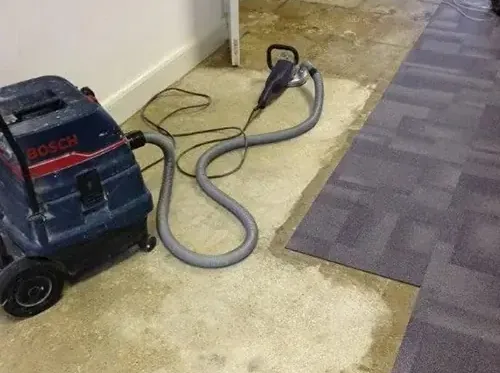
The extraction crew pumps standing water and pulls moisture out of floors with truck-mounted and portable units. Water extraction comes first because water that stands keeps moving into wood and drywall.
Shops near the pond or Main Street have an added problem. Stock, shelving and floor coverings soak up water quickly, so the crew moves or removes them early so the floor can be dried.
- Standing water pumped from the floor.
- Carpet and pad extracted or removed.
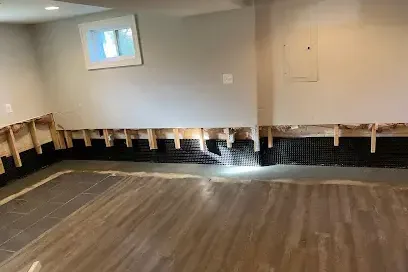
- Baseboards and the bottom of wet drywall opened.
- Soaked insulation removed.
- Damaged stock and cardboard hauled out.

Lower levels and the slow part of the job
A lower level that took on water is the slowest area to dry. Concrete, block and framing hold moisture, and hot, humid summers make drying slower without equipment.
The drying team places air movers and dehumidifiers, takes readings each day and keeps the equipment running until the materials read dry. A basement flooding cleanup plan covers extraction, removal and drying in one sequence.
- A musty smell that does not fade.
- Walls that feel cool and damp to the hand.
- Baseboards that stay dark or begin to swell.
- Floors that cup or lift at the edges.
Reporting past flooding to the Southern Middlesex study
The borough is one of ten Southern Middlesex County municipalities in a FEMA-funded study of recent, nuisance and chronic flooding. The Southern Middlesex Flood Mitigation and Resiliency Study keeps a flood map where past flooding can be reported, and it runs a resident survey.
An owner who recorded the date, the depth and photos during the cleanup has what such a report needs. The restoration team's moisture logs and photos back those details up.
Anyone unsure whether a past event counts can still note it, since the study asks about recent, nuisance and chronic flooding.
- The date and rough time the water first reached the building.
- Where the water entered the building.
- How deep it got.
- What was damaged.
- Photos of the water level before drying starts.
What the borough has planned, and what it does not change
Mill Pond Park on Main Street has a rain garden, the borough amended its stormwater management ordinance on May 28, 2024, and the 2019 plan recommends drainage work along North Main Street.
Those are planning and drainage steps. None of them changes what an owner does when water is already inside a building.
Getting ready for the next storm
Preparation is cheaper than cleanup, and it takes only a few habits.
- Know where the main power shutoff is and who in the household can reach it.
- Keep gutters and downspouts clear so roof water leaves the building.
- Raise valuables and stored boxes off the floor in lower levels.
- Keep a dated photo set of each room so changes are easy to show.
Questions
Is Mill Pond or brook flood water safe to clean up without help?
No. Brook water carries silt, runoff and sometimes sewage. Gloves and boots are the minimum, the power stays off, and soaked porous materials are best left for the restoration team to remove.
How quickly does flood water damage drywall and flooring?
Drywall and wood begin absorbing water as soon as it touches them, which is why extraction comes first. Mold can begin within 24 to 48 hours in damp conditions.
What does the Southern Middlesex flood map collect?
It collects reports of past flooding from people who experienced it, alongside a resident survey, as part of a FEMA-funded study of recent, nuisance and chronic flooding.
Can a flooded shop stay open while it dries?
Sometimes. Once the floor is extracted and the wet zone is contained, parts of a shop can stay open while drying equipment runs in the affected areas. The team decides after readings.
Does the borough's flood plan mean every property near the pond floods?
No. The plan describes the central part of the borough near the Mill Pond and Lawrence Brook, but flooding depends on the storm and the building. It makes no statement about individual homes.
Where does Lawrence Brook come from?
It leaves Farrington Lake upstream of Milltown, runs through the center of the borough and is a tributary of the Raritan River.
Does the flooding study count small events?
The study looks at recent, nuisance and chronic flooding, so smaller repeat events are part of what it asks residents about.