The southern part of Bound Brook, including downtown, is a low-lying natural flood plain of the Raritan River. When river or brook water reaches a building there, the first job is the same every time: get the water out.
Key takeaways
- The Middle Brook and the Green Brook form the borough's western and eastern boundaries, and both feed the Raritan River.
- News reports say the Raritan River becomes susceptible to flooding once it crests at 28 feet, and the Floyd record was 42.13 feet on September 17, 1999.
- Army Corps levees, flood walls, floodgates and pumping stations were designed to protect against up to a 150-year flood, and a design level is not a promise for every building.
- River and brook water is handled as contaminated, so porous materials are removed and the structure is dried.
- Extraction comes first, drying second, and readings decide when the building is ready for repairs.
Why Bound Brook floods from more than one direction
The Middle Brook and the Green Brook feed the Raritan River, and the southern part of the borough, including downtown, is a low-lying natural flood plain.
That layout explains the history. Tropical Storm Doria caused record flooding in Bound Brook and Manville in August 1971, the Raritan River crested at a record 42.13 feet during Hurricane Floyd, and news reports described the river running 12 feet deep down Main Street afterward.
- April 2007: a nor'easter flooded homes, including on East Second Street.
- August 2011: Hurricane Irene flooded homes again, with river levels nearly matching the Floyd level.
- September 2021: after Hurricane Ida, the Borough announced extra flood-related cleanup resources starting Wednesday, September 15.
Keeping a flooded building safe to enter
Flooded buildings carry hazards beyond the water: slippery silt, weakened floors and damaged electrical systems.
- Treat every outlet and panel as live until a check says otherwise.
- Watch for soft or sagging floors and stairs.
- Wear boots, gloves and eye protection.
- Stay out of any building where the water is still rising.
What the Army Corps work does and does not change
The Green Brook Flood Risk Management Project, led by the Army Corps of Engineers, affects 13 towns. In the borough the Army Corps built levees, flood walls, floodgates and pumping stations, and the work ran from 1999 to 2015.
It was designed to protect against up to a 150-year flood. Officials said it let the borough go ahead with downtown redevelopment, though residents say they still worry whenever it rains.
A design level describes a storm, not a promise for every building. Heavy local rain or a failed pipe can still put water inside, and the cleanup steps are the same.
Water extraction: what the crew pumps and removes
The extraction crew starts with standing water, using submersible pumps for depth and truck-mounted units for what remains in floors. Water extraction has to come first, because water left in place keeps soaking drywall, wood and plaster.
Water in a wall can look minor from the outside. Readings show how far it traveled and which sections must be opened.
- Standing water pumped out.
- Water pulled from carpet and pad.
- Mud and silt cleared from floors.
- Soaked insulation and the bottoms of drywall removed.
- Ruined stock, boxes and furniture hauled out.
Pumps and equipment: what each does
Different machines handle different parts of the water.
- Submersible pumps move large volumes of standing water.
- Truck-mounted units pull water out of floors and carpet.
- Portable extractors reach corners, stairs and small rooms.
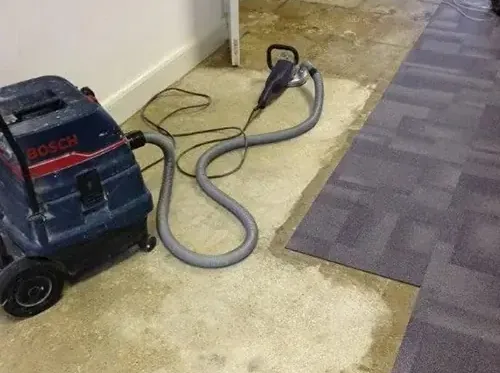
- Wet vacuums finish the thin film that pumps cannot reach.
Flood water is handled as contaminated
River and brook flood water mixes silt, road runoff and sometimes sewage. Flash flood cleanup treats it as contaminated from the start, with protective gear and a plan for what stays and what goes.
What gets removed
- Carpet and pad.
- Drywall and insulation that soaked.
- Particle board cabinets.
- Mattresses and upholstered items.
What gets cleaned and dried
- Concrete and slab.
- Solid wood framing.
- Tile and other hard flooring.
- Hard furniture with sealed finishes.
After the water recedes: mud, silt and access
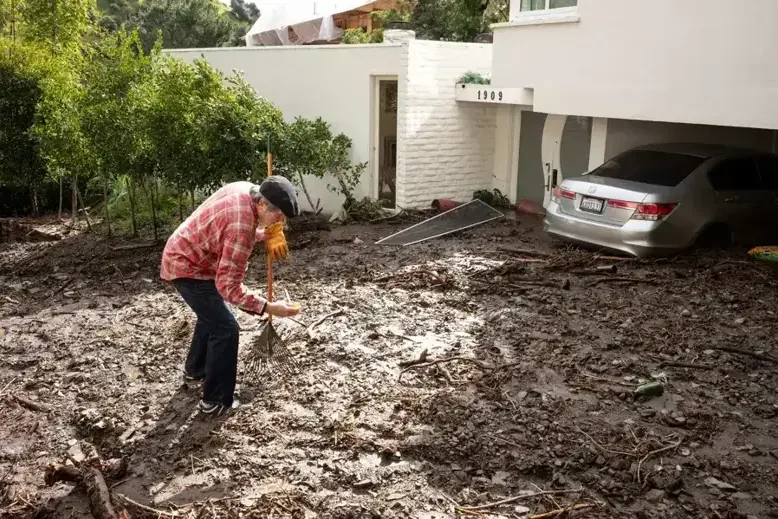
When the river drops, the flood leaves silt and debris behind.
- Mud and silt shoveled and hauled out before it dries into a crust.
- Wet contents moved out so floors can be cleaned.
- Electrical panels, outlets and appliances that stood in water kept off until checked.
- Doors and windows opened where it is safe, so air can move.
Drying a flooded building
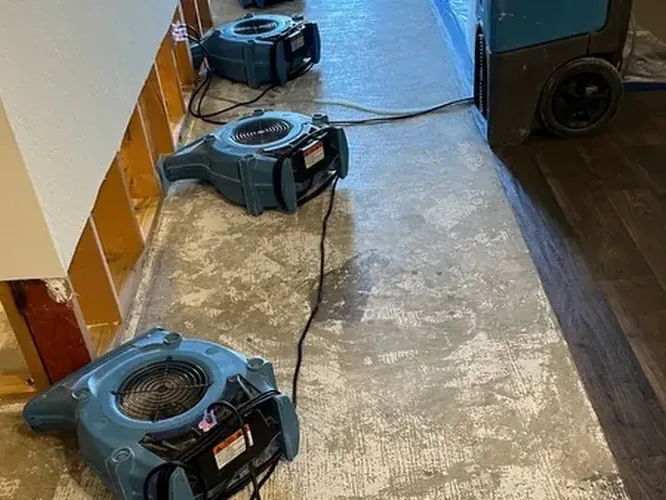
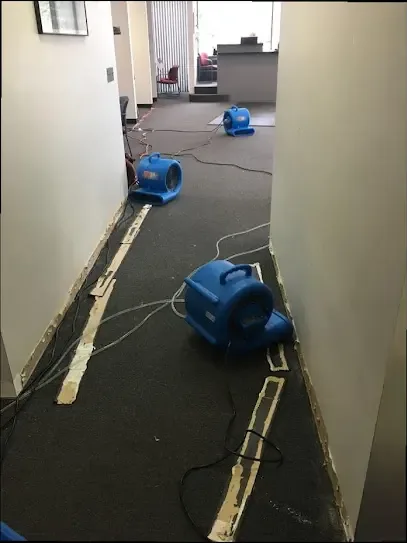
After extraction, the structure still holds moisture. The drying team sets air movers and dehumidifiers, takes readings on walls, floors and framing, and checks the numbers each day.
Structural drying is finished only when readings match dry reference points. Mold can start within 24 to 48 hours, so the equipment goes in early.
- Moisture readings on walls, floors and framing.
- Air movers set to push air across wet surfaces.
- Dehumidifiers running in closed rooms.
- Daily checks until every material reads dry.
Homes and shops have different priorities
A resident of East Second Street recalled repeated flooding of his home from Hurricane Irene, the 2007 nor'easter and Hurricane Floyd. For a home, the priorities are extraction, removing what cannot be saved and drying the structure.
Main Street businesses sat in the Floyd flood zone. For a shop or office, the priorities also include stock, records and keeping part of the space open while drying equipment runs elsewhere.
- Move stock and records up and out of the wet area.
- Keep a list of damaged stock with photos.
- Ask the crew which zones can stay open while drying runs.
Questions
At what level does the Raritan River flood Bound Brook?
News reports say the Raritan River becomes susceptible to flooding at Bound Brook once it crests at 28 feet.
Did the Army Corps project end flooding in the borough?
It was designed to protect against up to a 150-year flood, and officials said it let downtown redevelopment go ahead. Residents say they still worry when it rains, and a design level is not a promise for every building.
Is brook flood water safe to clean up without protection?
No. River and brook water carries silt, runoff and sometimes sewage, so gloves, boots and a plan for removing soaked materials come first.
How long does a flooded building take to dry?
Drying commonly takes several days, and longer for thick walls and slabs. The team keeps checking readings until the materials are dry.
What did the Borough offer after Hurricane Ida?
After Hurricane Ida, the Borough announced extra flood-related cleanup resources starting Wednesday, September 15.
How is flood water different from a plumbing leak?
Flood water comes from outside and carries silt, runoff and sometimes sewage. A leak from a clean supply pipe does not, which changes what can be saved.
Why does extraction come before drying?
Drying equipment cannot work on standing water. Removing it first lets air movers and dehumidifiers dry the materials instead of the puddle.
Can a flooded building be entered right away?
Only when the power is off and the water has stopped rising. Silt is slippery, floors can weaken and the electrical system may be damaged.