Rapid local response
Dispatch runs 24/7, and active water is treated as urgent on nights, weekends and holidays.
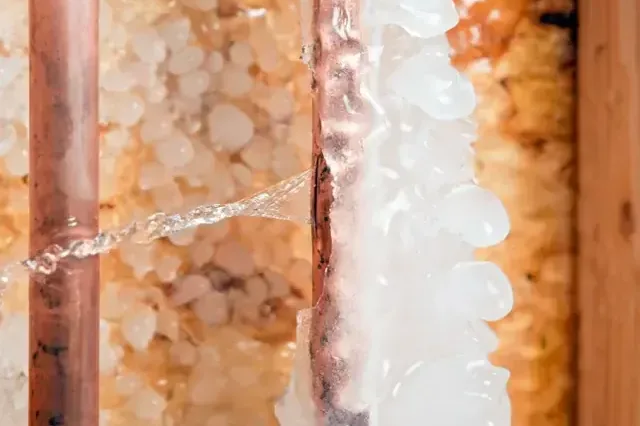
Ice often splits a pipe quietly, and the damage shows up when it thaws and water pours into walls and ceilings. The drying team extracts the flood, opens the wet cavities and monitors them until dry.
(888) 471-9821Handle the thaw damage nowClose the main shutoff as soon as water appears and open a faucet to drain the pipes.
Warm the area gently, since a space that stays frozen can crack more pipes.
Clear furniture and electronics from under wet ceilings.
Photograph the split pipe, the wet areas and any damaged items.
Independent restoration contractors do the work. This is how a proper job runs, so you know what to expect and what to ask for.
Dispatch runs 24/7, and active water is treated as urgent on nights, weekends and holidays.
The drying team maps moisture first, then dries the structure until the readings say dry.
Daily moisture readings and timestamped photos taken before demolition, the file an adjuster asks for.
Basements, sump pits, frozen pipes in cold snaps and heavy summer downpours are everyday calls here.
A frozen pipe that leaks into one wall or ceiling usually costs $1,500 to $3,500 to dry. Two levels or a leak that ran for days costs more, from $3,500 up to $10,000 or more.
Ranges are typical, not a quote: the water category, the wet square footage, the material class and how fast drying started move the number most. Run the water damage cost calculator for a closer planning range.
The flow is shut off and collected water is pulled from floors.
Wet drywall and insulation are cut out to expose framing.
LGR units and air movers run through walls and ceilings.
Daily readings decide when equipment is removed.
Winters here are moderately cold, and February is the snowiest month. In January 2018 water mains and pipes froze across New Jersey during a cold snap, a regional reminder of how a freeze turns into a flood once the pipes thaw.
A frozen pipe is often plugged with ice, so little water escapes until it melts. The crack then opens and the flow starts, sometimes while the building is empty.
The first job is to stop the flow at the shutoff and pull out what has collected through water extraction.
A split without any freeze gets the same steps, as described under burst pipe water damage.
Open cabinet doors on exterior walls, keep heat on in vacant spaces and let a faucet drip during a hard cold snap. A plumber can add insulation to exposed runs once the building is dry.
Everyone in a building should know where the water main shuts off. Closing it quickly after a pipe thaws can cut the amount of water the drying team has to remove.
Freeze damage gets the same plan in the Fifth Ward, Feaster Park and Edgebrook-Westons Mills, and in apartment buildings, houses and offices across the rest of the city.
The same service nearby: frozen pipe water damage in North Brunswick, Highland Park, Milltown.
Water damage restoration in New Brunswick · every town covered
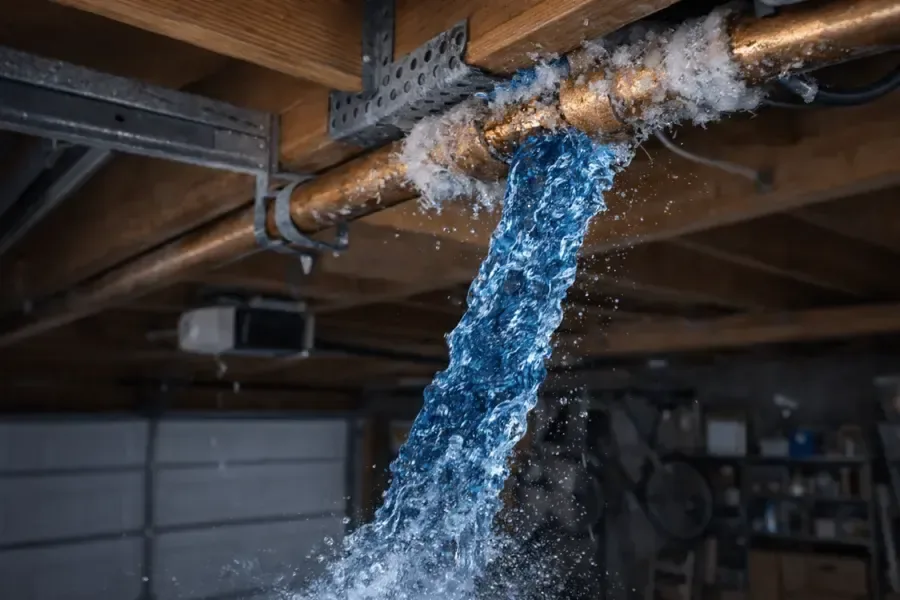 Burst Pipe Water Damage in New BrunswickPressurized supply failures inside walls and ceilings, extracted after the shutoff and dried.Read the full rundown
Frozen Pipe Water Damage in North BrunswickPipes that split in a cold snap, traced through garage ceilings and outside walls and dried.Read the full rundown
Water damage restoration in New BrunswickOpen the town page
A faucet that runs slowly or not at all in freezing weather, frost on exposed pipe or a bulge in the pipe all point to ice inside.
Slow warmth from a hair dryer or heater can work, but never use an open flame, and keep the shutoff nearby in case the pipe is already cracked.
Sudden freeze damage is commonly covered when heat was kept on, while neglected vacant buildings may be treated differently. The policy wording decides.
Open wall and ceiling cavities usually take three to five days, and longer when insulation stayed soaked or heat was low.
Yes. A plumber can replace the split section while the drying team works, and opening the wall for the repair often helps the cavity dry faster.
Pipe thawed and flooded a wall? (888) 471-9821.
Extraction, cavity drying and daily moisture readings start as soon as the crew reaches the building and the shutoff is closed.