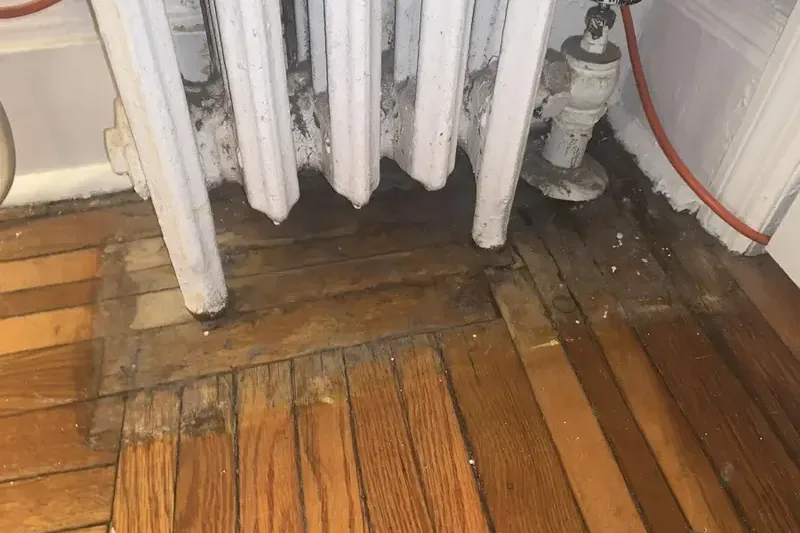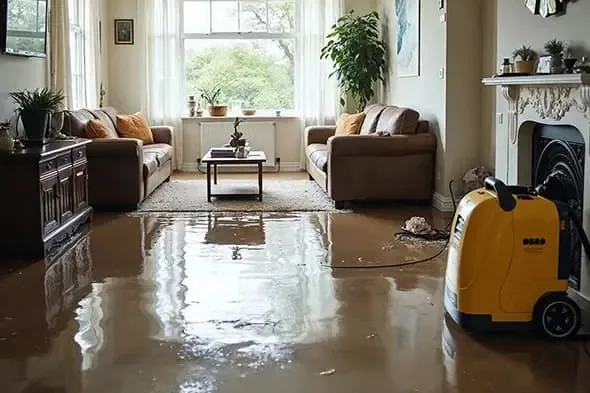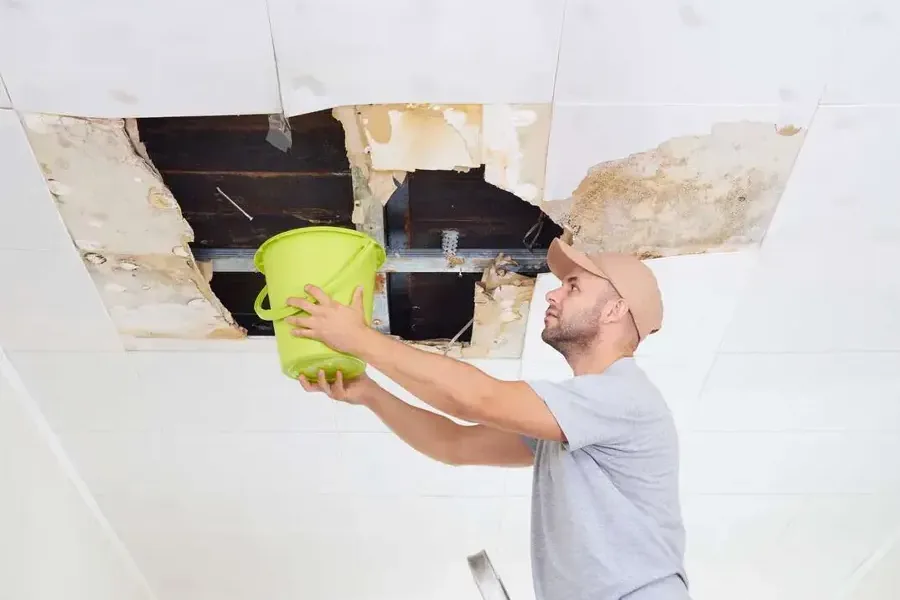
A stain that spreads across a ceiling, then a steady drip, usually means water is moving through the floor of the unit above. In New Brunswick, where most occupied homes are rented, that leak often starts in a neighbor's kitchen or bathroom.
Key takeaways
- About 12,322 of the 15,676 occupied homes in New Brunswick are rented, so a leak from above is a common problem.
- A sagging, bulging or dripping ceiling can fail suddenly, so people and belongings move out from under it first.
- Shutting off the water at the source, usually in the unit above, stops the leak, and the building manager can arrange that.
- Soaked drywall and insulation are opened and dried, because paint hides moisture without removing it.
- Photos and notes taken before anything moves help everyone involved sort out the repair.
Why leaks from above are so common in New Brunswick
The Census counts about 16,854 housing units in the city, and about 12,322 of the 15,676 occupied homes are rented. Only about 3,354 are owner-occupied.
The housing mix stacks homes on top of each other. About 3,348 units are in buildings with 50 or more units, thousands more are in smaller multi-unit buildings, and new high-rise apartment buildings have joined the downtown skyline in recent decades.
In a stacked building, one failed hose or supply pipe can reach the ceiling below.
That is why a ceiling stain in one apartment so often has a neighbor or an owner on the other side of it.
Signs a ceiling is holding water
Not every ceiling leak drips. Some show only a faint stain, a bubble in the paint or a change in the texture of the drywall.
A ring that keeps widening after the drip stops means water is still moving above, so the source has not been closed.
- A brown or yellow stain that keeps growing.
- Paint that bubbles or peels.
- A bulge or sag, often in the middle of a room.
- A drip at a fixture, a vent or a smoke detector.
- A musty smell that grows stronger near the ceiling.
First steps when water comes through the ceiling
Two things matter at the start: protect people, then contain and document the leak.
Protect people first
A ceiling that bulges or sags is holding water that can drop all at once. Anyone nearby moves out from under it.
If water is near a light fixture or an outlet, the breaker for that room goes off.
Contain and document
Small steps now keep the loss from spreading.
- Place buckets and move furniture, electronics and rugs away from the drip.
- Photograph the ceiling, the walls, the floor and any items that got wet.
- Write down when the leak was first noticed.
- Tell the building manager or the owner right away, and the upstairs neighbor if possible.
Finding the source above
The leak usually starts in one of a few places in the unit above. The restoration team traces the path with moisture meters and thermal imaging, because water often travels along a joist or a pipe before it shows up as a stain.
An appliance leak is a common source in a rented home, and the shutoff valve is usually close to the appliance.
- A washer supply hose or a dishwasher connection.
- A toilet supply or a tub overflow.
- A supply pipe or drain inside a wall or floor.
- A sink that overflowed or a faucet left running.
What to tell the building manager
A short, clear report gets the water shut off faster.
- Which room is wet and whether the leak is still active.
- When the stain or the drip was first seen.
- Any water sounds from the unit above, such as a running toilet or a washer cycle.
- The photos taken so far.
- A way to reach the tenant and a time access can be given.
When one leak crosses several units
Water follows gravity, walls and floor cavities, so a leak in one unit can wet the ceiling below and the walls beside it. Condo and townhouse leak cleanup means mapping the wet areas unit by unit with moisture readings rather than guessing from stains.
In a tall building, the mitigation team checks the unit under the wet ceiling, the walls on either side and, where the leak was large, the floors beneath.
In a tall building, water can follow a pipe chase down several floors before it appears on a ceiling.
What drying a ceiling involves
A wet ceiling is more than a stain. It is a layer of drywall and insulation holding water above everything below.
Opening the ceiling
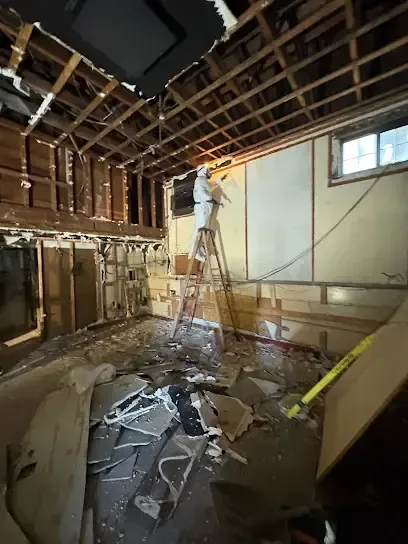
Wet drywall loses strength and can sag or crumble. The crew cuts away soaked sections so the cavity above can dry, and removes wet insulation, which does not dry well.
Drying equipment
Air movers and dehumidifiers run until readings match the dry areas. Skipping that step is how a stain returns and how mold starts, and mold can begin within 24 to 48 hours.
The ceiling leak water damage work follows this order.
Closing up
After the readings are dry, new drywall is hung, finished and painted. Painting comes last, because a coat applied too early traps moisture.
Who handles what in a multi unit building
Responsibility for repairs depends on the lease or the building's rules, so the first step is to tell the building manager or the owner and get the leak stopped.
- Tenant: reports the leak, protects belongings and keeps photos.
- Building manager or owner: shuts off the water source and arranges repairs.
- Upstairs neighbor: gives access to the source of the leak.
- Restoration team: extracts water, opens wet materials and dries the affected units.
Questions
Should a ceiling be repainted once the drip stops?
Not yet. A dry-looking stain can hide wet drywall and insulation. Paint over damp material traps moisture, and the stain usually returns.
Can a ceiling leak damage the floor below it too?
Yes. Water that drips down a ceiling also runs down walls and soaks the floor and baseboards, so the whole room is checked.
What if the upstairs neighbor is not home?
The building manager or owner can usually reach the water shutoff for that unit or the building. If water is actively pouring, that step comes before the cleanup.
Does a small leak need professional drying?
Anything that soaked drywall or insulation does. Small leaks that spread through a wall cavity are the ones that go unseen and lead to mold.
How long does drying take for a ceiling and wall?
Drying commonly takes several days. The crew keeps equipment running until readings show the material is dry.
Can the unit above be checked without opening its floor?
Often. Moisture meters and thermal imaging show where water traveled, and the floor is opened only where the readings point to trapped water.
Does a leak from above always come from plumbing?
No. A roof leak on a top floor, a window leak or a failed seal around a tub can also send water down, so the source is traced rather than assumed.
Should belongings be moved out of the unit below the leak?
Items under the stain move first, then anything near wet walls. Furniture is lifted off wet carpet so it is not stained or soaked.