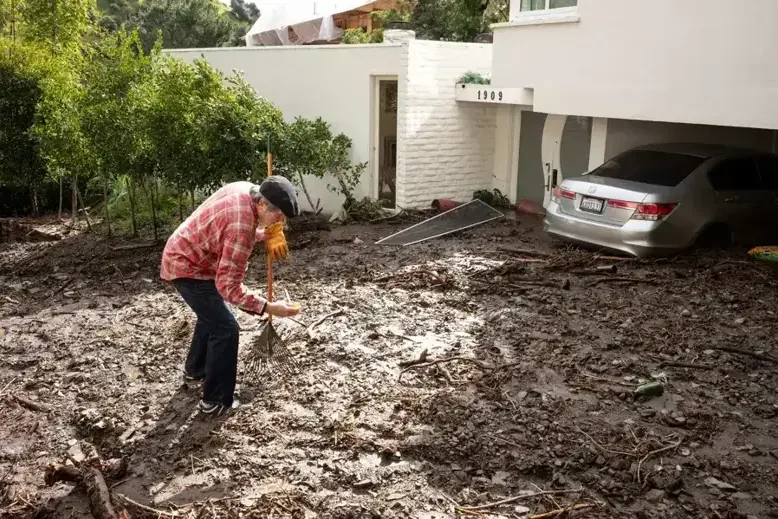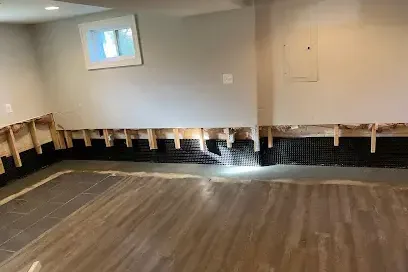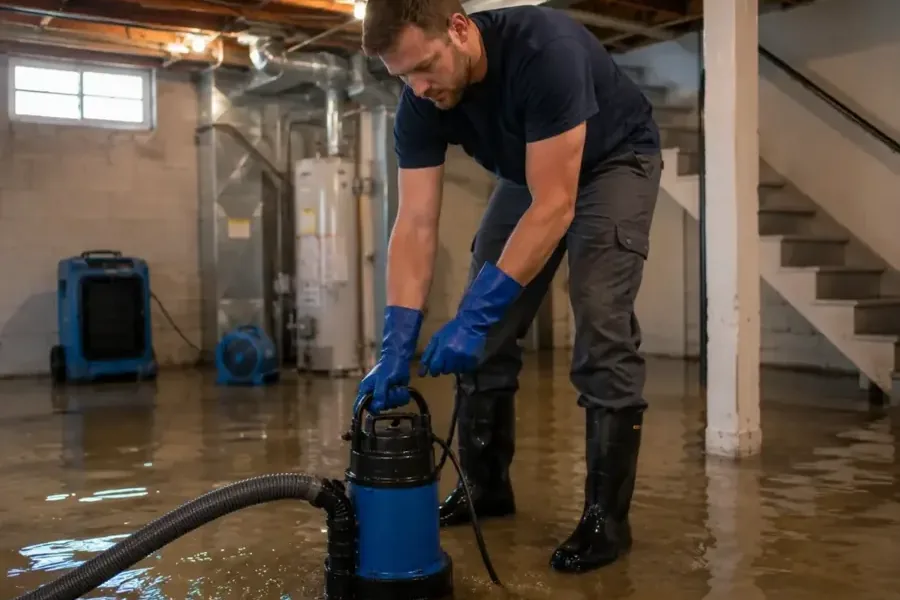
A sump pump is built to handle groundwater, not a river. When the Raritan River climbs and the pump quits, the water has only one place to go, and that is into the lowest room.
Key takeaways
- The National Weather Service gauge on the Raritan River at Manville sets minor flooding at 14 feet, moderate at 17 feet and major at 20 feet.
- At a gauge reading of 16 feet, Lincoln Avenue in the Lost Valley section floods, and at 17 feet Main Street floods.
- The borough's sewer ordinance bars sump pump discharge from the sanitary sewer, so a failed pump cannot be patched with a drain connection.
- River water is handled as contaminated, so soaked porous materials are removed and the structure is dried with equipment.
- The borough's building permit information asks owners to confirm a property is not in a flood zone before a basement project.
What the river gauge says about when to worry
The National Weather Service gauge on the Raritan River gives owners a plain way to judge a rise. Readings are stages measured in feet, and each step brings flooding to a new set of places.
Lost Valley is a low-lying section of eastern Manville on the flood plain between the Raritan River and the Millstone River. The southern part of Main Street is described as flood prone because Royce Brook backs up with water from the Millstone River.
- 11 feet: water begins to cover Dukes Park.
- 12 feet: roads and trails flood inside the park.
- 14 feet: minor flooding.
- 16 feet: Lincoln Avenue in the Lost Valley section floods.
- 17 feet: moderate flooding, street flooding grows and Main Street floods.
- 18 feet: East Dukes Parkway and several bridges flood and roads close.
- 20 feet: major flooding, widespread across the borough and expanding between Dukes Parkway and Brooks Boulevard.
Why a pump fails when the river is high
A pump can fail for three different reasons during the same storm.
Power loss
Storms often take out power, and an electric pump stops with it. A battery backup helps, but only for as long as the battery lasts.
Too much water
A pump sized for groundwater can be overwhelmed when the soil around a house is saturated and the river is rising. The pit fills faster than the pump can empty it.
Pumps also have a limit on how much water they can move at once, and a long, heavy storm can keep the pit full for a long time.
Nowhere to send the water
The borough's sewer ordinance does not permit sump pump discharge into the sanitary sewer, and it bars stormwater, surface water and ground water too. That is one more reason a failed pump is not solved by improvising a drain connection.
First moves when the pump quits
The goal is to protect people and belongings while the water is still rising. The sump pump failure cleanup starts once it is safe to go in.
If the water is still rising, belongings come up first and the cleanup waits until the river drops.
- Turn off power to the lower level from a dry spot.
- Move electronics, papers and valuables to a higher floor.
- Photograph the water level and the pit before anything is touched.
- Stay out of standing water until the electricity is confirmed off.
- Leave carpet, pad and drywall for the restoration team to remove.
Preparing a lower level before the river rises
The gauge gives some warning in many storms, and preparation works best when it is done before the rain.
- Test the pump and the float by pouring water into the pit.
- Check that the discharge pipe is clear and runs outdoors.
- Raise stored boxes, electronics and furnishings off the floor.
- Know where the power shutoff for the lower level is.
- Keep photos of the room as it normally looks.
River water is not rainwater
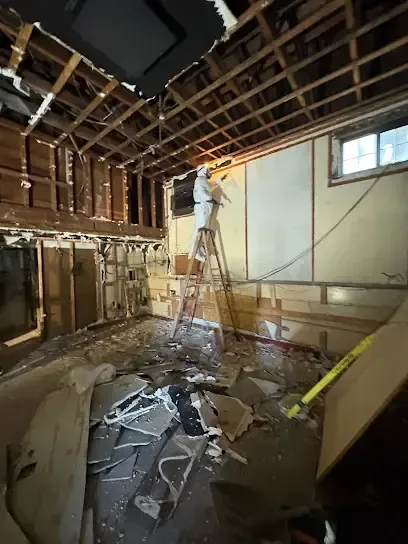
Raritan River and Millstone River water carries silt, runoff and sometimes sewage. Flash flood cleanup treats it as contaminated from the start.
Drywall, insulation, carpet and pad that the water touched are usually removed. Hard materials such as concrete and solid framing are cleaned and dried.
Extraction, drying and repairs
The extraction crew pumps out the standing water first. Then the drying team places air movers and dehumidifiers and checks readings daily, which is the same sequence a basement flooding cleanup follows.
Before a basement project, the borough's building permit information asks for confirmation that the property is not in a flood zone, and then all Uniform Construction Code permits may be required.
- Standing water pumped out of the lowest area.
- Wet materials sorted into keep, dry and remove.
- Equipment set on walls, slab and framing.
- Readings repeated until every material matches a dry reference.
After the water goes down
A falling river does not mean the danger is over. Mud, silt and wet materials stay behind, and the electrical system may have been under water.
- Keep the power off until the system has been checked.
- Do not run a furnace or water heater that stood in water.
- Photograph the high-water level and the mud before cleanup starts.
- Wear boots, gloves and a mask when moving silt and debris.
How high the river has gone before
Past crests at the Manville gauge show how often these levels return.
- September 17, 1999, Hurricane Floyd: 27.1 feet.
- April 16, 2007, a spring nor'easter: 22.3 feet.
- March 14, 2010, heavy rain and flooding: 21.57 feet.
- August 28, 2011, Hurricane Irene: 26.24 feet.
- September 2, 2021, remnants of Hurricane Ida: a record 27.66 feet.
- January 10, 2024: 20.04 feet.
What was reported after Ida
NJ.com reported about 10 inches of rain from the Ida remnants, and NJ Spotlight News reported at least 5.5 feet of floodwater in some areas. The New Jersey Department of Environmental Protection says the borough had extensive flooding from the Raritan River and Millstone River.
Questions
At what gauge reading does Main Street flood?
At 17 feet on the National Weather Service gauge, which is the moderate flood stage, street flooding grows and Main Street floods.
Can a sump pump discharge to the sanitary sewer in Manville?
Under a borough ordinance, sump pump discharge is not permitted in the sanitary sewer, and neither are stormwater, surface water or ground water.
Is a battery backup enough in a river flood?
A backup keeps a pump running through a power loss, but it cannot make a pump outpace a rising river. When the river is high, the safer plan is to get belongings up and stay out of the water.
How long does a flooded lower level take to dry?
Drying commonly takes several days, and longer when walls and the slab soaked up water. Readings show when the structure is dry.
Does river flood water need different cleanup than a burst pipe?
Yes. River water is contaminated, while water from a clean supply pipe is not. That changes which materials can be kept and which are removed.
What is the Lost Valley section?
Lost Valley is a low-lying section on the eastern side of the borough, on the flood plain between the Raritan River and the Millstone River, and Lincoln Avenue there floods when the gauge reaches 16 feet.
What happens when the gauge reaches 20 feet?
That is the major flood stage. Flooding is widespread across the borough and expands between Dukes Parkway and Brooks Boulevard.