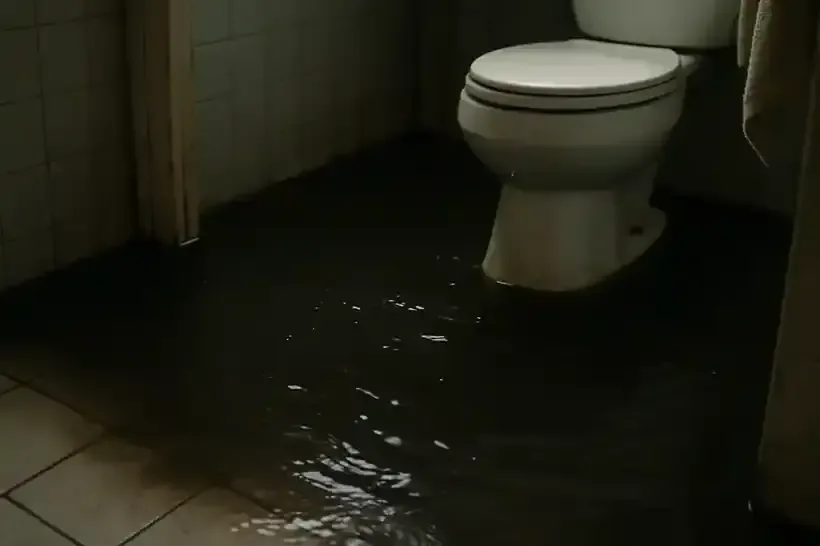
Sewage coming up through a floor drain, tub or toilet is a health hazard, not just a mess. In Highland Park the order of steps matters: keep people out, report the backup, then bring in the cleanup crew.
Key takeaways
- Sewage is handled as Category 3 water, the highest contamination level, from the start.
- The borough's water and sewer page tells residents with a sewer backup to contact the water and sewer emergency number, or the borough police after regular hours.
- Utility Service Affiliates, Inc. has operated and maintained the borough's water and wastewater systems since July 1, 2020.
- Porous materials that sewage touched, such as carpet, pad and wet drywall, are removed, not cleaned.
- The affected area is cleaned, disinfected and dried before rebuilding starts.
First steps when sewage comes up a drain
Backup water can carry bacteria and viruses, so the first goal is to keep contact to a minimum.
- Keep people and pets out of the affected room.
- Stop adding water: no flushing, laundry, dishwasher or long showers.
- Turn off power to the area if water is near outlets or appliances.
- Do not use a household vacuum on sewage.
- Photograph the area before anything moves.
Protecting a household while it waits
A household waiting for the cleanup crew has a few ways to stay safe.
- Wear rubber boots and gloves if contact cannot be avoided, and wash up afterward.
- Keep food, dishes and toothbrushes out of the affected area.
- Turn off the heating or cooling fan if it pulls air through the affected room.
- Keep the room closed so odor and contaminated air stay put.
Who to contact in Highland Park
Two parties are involved in most backups: the operator of the system and the cleanup crew.
The borough's water and sewer contact
The borough's water and sewer page tells residents with a sewer backup to contact the water and sewer emergency number, or the borough police after regular hours.
Reporting early matters because the operator can check whether the borough's main is involved, while the cleanup crew deals with the house.
Having the address and the fixtures that backed up ready makes the report faster.
Who runs the system
Since July 1, 2020, Utility Service Affiliates, Inc., a Middlesex Water Company subsidiary, operates and maintains the borough's water and wastewater systems. The operating agreement runs ten years and expires in July 2030.
The borough receives all of its water from Middlesex Water Company, and its wastewater is transported to the Middlesex County Utilities Authority for treatment.
What Category 3 cleanup involves
Sewage backup cleanup follows a fixed order. The crew extracts the liquid, removes what cannot be cleaned and treats what remains.
Crews wear protective gear, and contaminated debris is bagged before it leaves the room, so the rest of the house stays clean.
- Liquid extracted with pumps and wet vacuums.
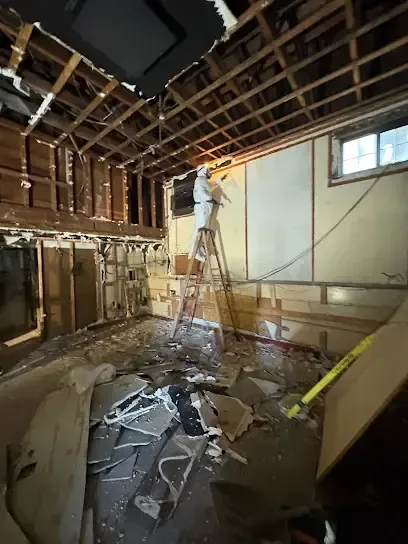
- Carpet, pad, soaked drywall and insulation removed and bagged.
- Hard surfaces scrubbed and treated with a disinfectant.
- HEPA air scrubbers running while materials come out.
- Odor and moisture checked before rebuilding.
Why porous materials go and hard surfaces stay
Sewage soaks into anything that wicks. Carpet, pad, upholstered furniture and drywall pull contaminated water deep inside, where cleaners cannot reach it.
Hard, sealed surfaces such as tile, concrete and finished wood can be cleaned and disinfected, so they usually stay.
- Removed: carpet, pad, soaked drywall, insulation and particle board.
- Cleaned: tile, sealed concrete, metal and finished wood.
- Decided case by case: area rugs, books, cardboard and upholstery.
Drying after the disinfecting
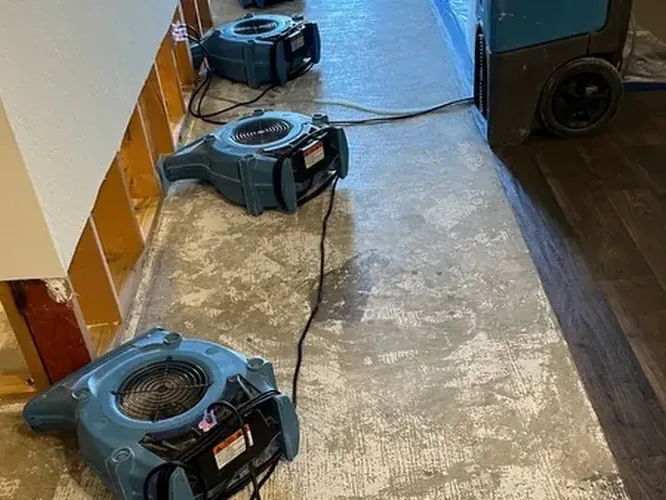
Once the contaminated materials are out, the space still holds water in its studs, slab and subfloor. The drying team sets air movers and dehumidifiers and takes readings until the structure is dry.
Skipping structural drying leaves damp framing behind, and mold can start within 24 to 48 hours.
- Moisture readings on studs, plates and subfloor.
- Air movers aimed at lower walls and floors.
- Dehumidifiers pulling moisture from the room.
- Daily checks until every reading is back to normal.
Rain, sump pumps and sewer backups
Section 328-34 of the borough Sewer Use Ordinance says no roof drainage, sump pumps or cellar drainage may discharge into the sewer system. That rule keeps storm water out of the system that carries household sewage.
Rain on a large scale puts load on every drain in a town. The National Weather Service's report on Ida lists Highland Park observers reporting 7.98 and 7.80 inches of rain, read on the morning of September 2, 2021.
Apartments and rented homes
Highland Park has apartment buildings, and renters live in most occupied homes, with an owner-occupied rate of 40.3 percent for 2020 to 2024. A backup in a shared building can involve a building manager and several units.
The restoration work for Highland Park apartments and houses maps the wet areas unit by unit and treats each one the same way.
- Tell the building manager or the owner when the backup starts.
- Name every fixture that backed up and every unit that notices water.
- Keep photos and notes for anyone who needs to see them.
Information that speeds the cleanup
A few details help the cleanup crew plan before work starts.
- Which fixtures backed up, such as a floor drain, a tub or a toilet.
- When the backup began and whether it is still active.
- Whether a neighbor has the same problem.
- Photos taken before anything was moved.
Questions
Is a sewer backup the same as a flood?
No. Rainwater and clean supply water are different from sewage. Backup water is Category 3 and is removed and disinfected with protective gear.
Can a sewer backup be cleaned with household bleach?
Bleach on a sewage-soaked carpet does not make it safe. Porous materials are removed, and hard surfaces are cleaned with a proper disinfectant.
Who should be told first, the borough or the cleanup crew?
Both, and the order is flexible. The borough's emergency contact deals with the main, and the cleanup crew deals with the house, so neither waits for the other.
Will a sewer backup happen again?
That depends on the cause. A blockage in a house pipe is cleared by a plumber, a problem in the main is handled by the operator, and the cleanup team works on the damage either way.
How long until the room can be used again?
Removal and disinfecting come first, then drying that commonly takes several days. The room is ready for rebuilding when the readings are back to normal.
What if the backup is in an apartment?
Tell the building manager or the owner right away. The cleanup crew maps the affected units and treats each wet area the same way.
Should the toilet or drain be used again right away?
No. Until the cause of the backup is found and cleared, every flush or load of laundry adds more water to the problem.
What are the health risks of sewage?
Backup water can carry bacteria and viruses, which is why contact is limited and protective gear is used. Anyone with cuts or a weak immune system stays out of the area.
When can people return to the room?
After the contaminated materials are out and the surfaces are cleaned, disinfected and dry. Until then the room stays closed.