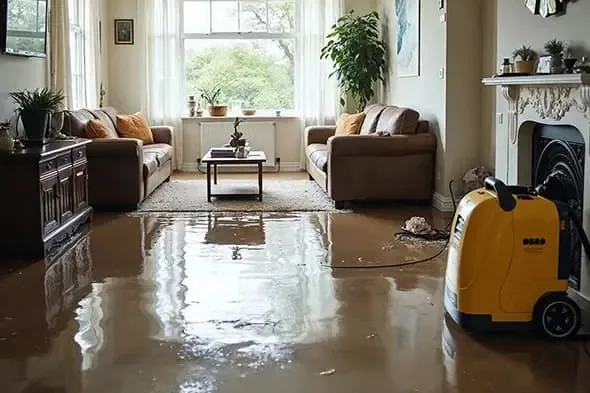
A leaking tank can empty a lot of water onto a floor, the bottom of a wall and whatever sits beside it. In Milltown the fix has two parts: cleaning up the water and getting the replacement permitted.
Key takeaways
- A leaking tank is replaced, not patched, and installing or replacing a hot water heater takes a building permit from the borough's Construction Office.
- Shut off the water supply to the tank, and the power or gas to the heater, before touching anything wet.
- Extraction comes first, then wet drywall bottoms, insulation and flooring are opened and dried.
- The median home was built in 1963 and most housing units are single-family detached homes, so cleanup often involves older floors, walls and finishes.
- Plan the cleanup and the replacement together so the new tank is installed after the area is dry.
What a failing tank does in a Milltown house
The median year homes were built here is 1963, and about 2,461 of 2,753 housing units are single-family detached homes. A tank in a utility room, garage or lower level sits beside floors and walls that are decades old.
Tanks tend to leak at the fittings or the seams, and the water travels across the floor and into the bottoms of walls.
A tank fails from the inside out. Corrosion thins the shell or loosens a fitting, and the first sign may be a puddle rather than a drip.
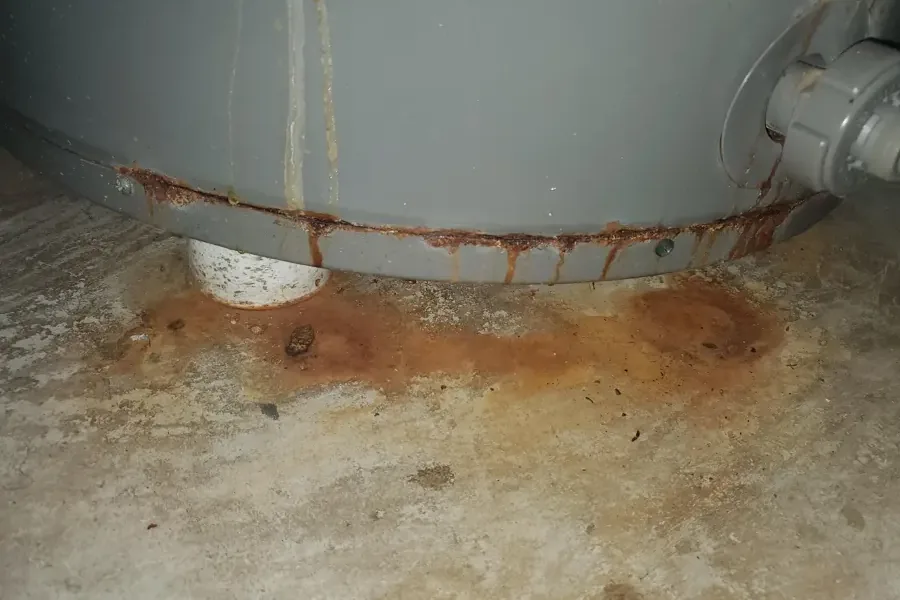
- Rust at the base of the tank.
- Moisture around the fittings or the relief valve.
- A damp floor beside the heater.
- Rumbling or popping while the tank heats.
Electric and gas heaters: what changes after a leak
Electric heaters add a shock hazard and gas heaters add a gas supply, so the shutoff differs.
- Electric: the breaker goes off before anyone touches the tank or the water.
- Gas: the gas control is turned to off, and any gas smell is treated as an emergency away from the house.
- Both: the cold water supply valve is closed.
First moves after a leak
Shut the tank down first, then limit the spread.
Shut the tank down
- Close the cold water supply valve on top of the tank.
- Turn off power at the breaker for an electric heater, or the gas control for a gas heater.
- Do not touch the water until the power is off, because water from a tank can be hot enough to scald.
Limit the spread
- Move boxes and stored items out of the wet area.
- Photograph the tank, the floor and the damage.
- Leave the rest of the water for the extraction crew.
How much water a tank can release
A residential tank holds dozens of gallons, and a failed seam can release most of it across a floor. The water does not stay near the heater.
In a utility closet it runs under walls, and in a garage or a lower level it spreads across the floor.
What the drying crew removes and dries
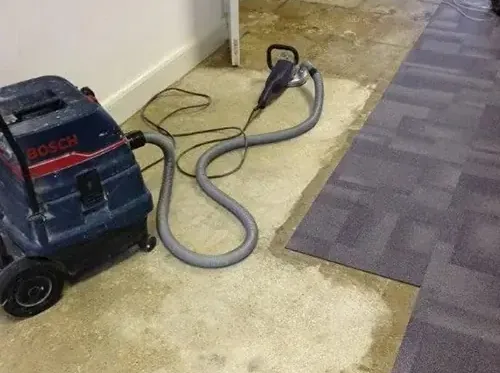
The extraction crew pumps or vacuums the standing water first. Water extraction is quick for a tank because the volume is limited, but the water has often traveled farther than it looks.
A water heater leak cleanup then opens whatever soaked, based on moisture readings.
Hardwood floors near a tank can cup or buckle when water sits on them, so speed matters.
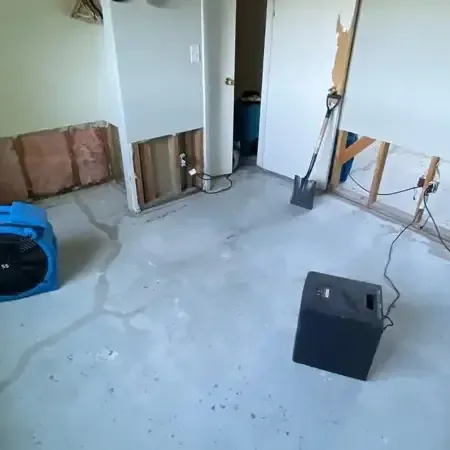
- Wet drywall at the base of walls opened or removed.
- Soaked insulation behind the tank removed.
- Flooring that absorbed water lifted or dried in place, depending on readings.
- Cardboard boxes and particle board shelving discarded.
The replacement permit in Milltown
A leak ends with a new tank, and the new tank comes with paperwork.
What the borough requires
A building permit from the borough's Construction Office is needed to install or replace a hot water heater, furnace or boiler. A leaking tank means replacing it, so the permit is part of the repair.
The permit rule is a borough requirement, not a restoration step, so the cleanup crew and the installer work separately. The only overlap is timing.
Timing the cleanup and the new tank
- Ask the installer whether the permit has been pulled before the old tank comes out.
- Keep photos from before the cleanup for the installer and the file.
- Let the drying team finish first when possible, so the new tank does not sit over wet framing.
Humid summers and slow drying
The borough has a humid continental climate with hot, humid summers, and damp air slows drying without equipment. Dehumidifiers and air movers run until the readings are normal.
A closed utility area with a dehumidifier running will be warm. That is expected, and the equipment stays until the materials are dry.
Records for the installer and the file
Good records help at every step of the repair.
- Photos of the tank, the leak and the wet area.
- The date and the time the leak was found.
- A record of the permit and the installer's work.
- Moisture readings from the drying team.
Related work that also needs a permit
The Construction Office also requires a building permit to finish a basement or attic and for kitchen or bathroom work that moves sink or appliance plumbing. After a leak, owners sometimes decide to rework a laundry corner or a utility area at the same time.
A leak from a washer or dishwasher supply gets the same extraction and drying treatment as a tank leak, which is what appliance leak water damage work covers.
Preventing the next leak
Small checks catch most problems early.
- Look at the tank base, the fittings and the relief valve every few months.
- Keep stored items off the floor near the tank.
- Know where the supply shutoff is.
- Plan to replace a tank before it fails.
Questions
Does Milltown require a permit to replace a water heater?
Yes. The borough requires a building permit from the Construction Office to install or replace a hot water heater, furnace or boiler.
Can a leaking water heater tank be repaired?
A tank that leaks from the seams or the shell is replaced. Fittings and valves can sometimes be repaired, and a plumber decides which case applies.
Should drying be finished before the new heater goes in?
Ideally. Opened walls and wet flooring are easier to dry with the old tank out of the way.
How long does drying take after a tank leak?
Drying commonly takes several days, and longer for thick materials or finished rooms. Readings show when it is done.
Is water from a leaking tank dangerous?
It can be. The water can be hot, and the electric or gas supply adds hazards, so those are shut off before anything wet is touched.
What does a gas water heater leak need besides cleanup?
A gas appliance needs its gas control turned off and a technician before it is restarted. Any gas smell is treated as an emergency.
Should boxes near the tank be thrown out?
Cardboard that soaked usually goes, while plastic bins can be wiped and dried.
What if the leak is from the relief valve?
A valve that drips can point to pressure trouble or an aging tank. A plumber checks it, and any water on the floor is dried the same way.
Does the permit cover a furnace or boiler too?
Yes. The same borough requirement covers hot water heaters, furnaces and boilers.